SWARM student engineers on the cutting edge of modular robotics
SWARM, one of seven WashU Robotics teams, is designing robots that can cooperate
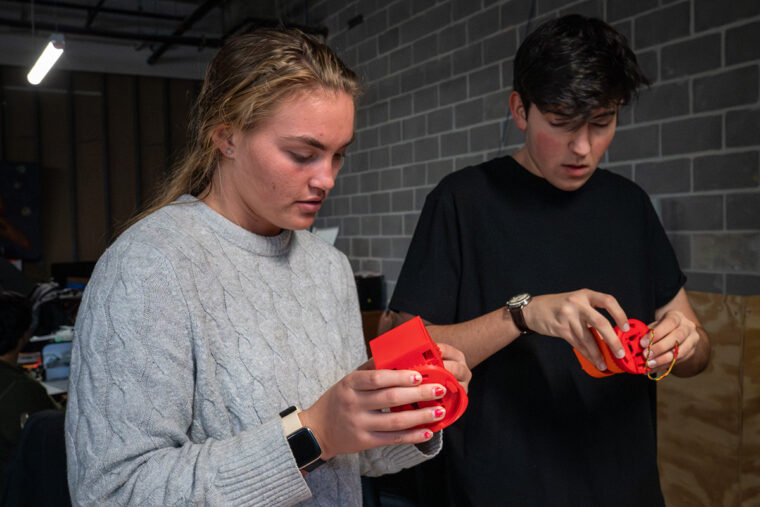
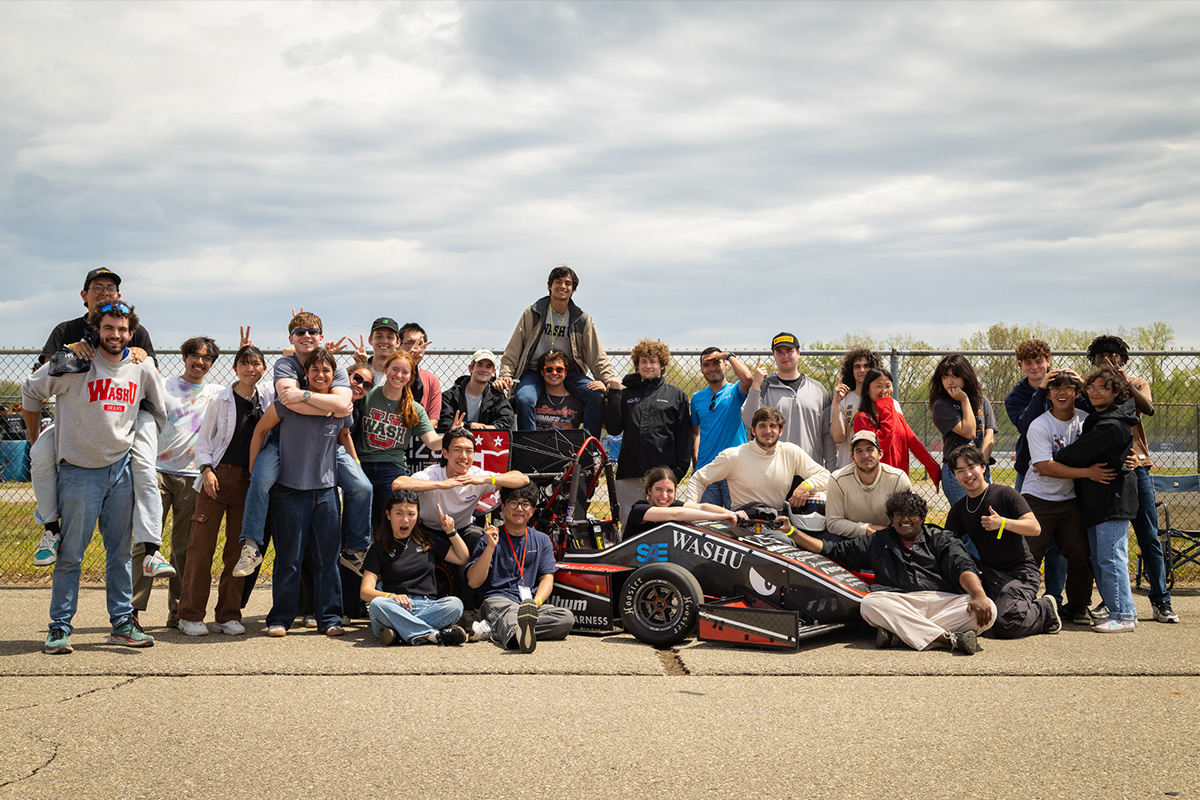
The phrase “the whole is greater than the sum of its parts” is doubly true for SWARM, the WashU Robotics team on the cutting edge of modular robotics. The project’s 15 members are working to create robots that can connect and cooperate to accomplish difficult or dangerous tasks.
“Think of it like an ant colony — a swarm. Just as ants will link their bodies together to form a physical bridge, our robots can autonomously lock together to build whatever structure the situation demands,” said Sebastian Theiler, captain of SWARM and a junior studying electrical engineering and robotics at the WashU McKelvey School of Engineering. “Right now, modular robotic systems are largely confined to the lab, but there are many possible applications.”
Take, for instance, a search-and-rescue operation. First responders could deploy a single robot to crawl through a collapsed building to assess damage. That robot could then beckon other robots to help it move heavy debris or to make a chain to clear a gap.
SWARM’s robots — essentially four-inch cubes of 3D-printed plastic — aren’t ready for such real-world tasks. Right now, the team is focused on getting the robots to autonomously shapeshift to navigate simple obstacles. But SWARM’s work today could lead to future discoveries.
Read the full story here.