WashU faculty, students search for hidden hazard in tornado’s path
Catalano leads effort to test lead levels in St. Louis soil
The EF-3 tornado that touched down in the St. Louis region last May left a 20-mile path of destruction. It knocked down trees, snapped power poles and severely damaged hundreds of houses and apartment buildings from DeBaliviere Place to the riverfront as well as the Wydown neighborhood in Clayton.
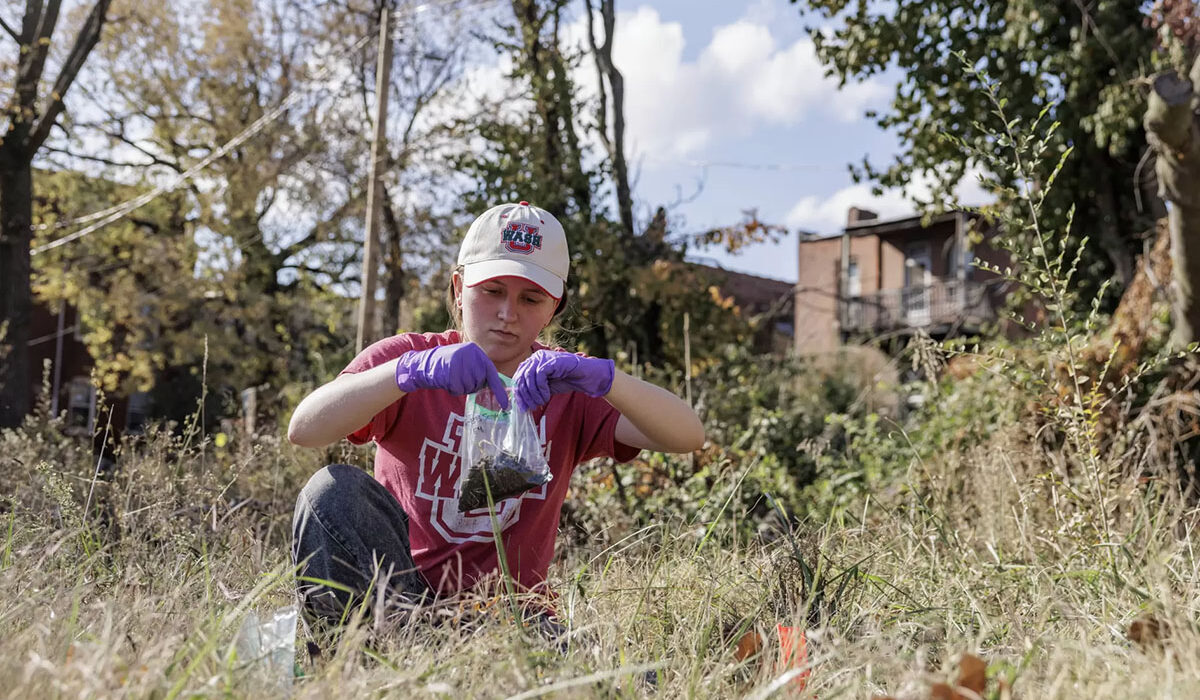
Much of the obvious debris has been cleaned up, but the disaster may have left behind a hidden threat that could linger for years. “We’re concerned that the tornado may have released lead into the community,” said Jeffrey Catalano, a professor of earth, environmental and planetary sciences. To address that concern, Catalano has joined CLEAN STL, a project that will test soil and air samples in the tornado’s path for lead, an insidious contaminant that is often left in the wake of floods, fires and other destructive events.
CLEAN STL is the inaugural project of WashU Public Exchange, a new initiative of the Brown School that aims to harness the expertise of Washington University in St. Louis researchers to address challenges across the region. Other CLEAN STL members include Sheretta Butler-Barnes from the Brown School, Dan Giammar and Jay Turner from the McKelvey School of Engineering, and Matthew Bernstine from the Sam Fox School. The project is working in cooperation with St. Louis community groups representing neighborhoods in the tornado’s path. Better Family Life has been a key partner from the beginning, and 4theVille and LOVEtheLOU also recently joined the project.
Read the full story here.