

Engineering public health
Research in McKelvey Engineering intersects with public health
Engineering is often said to be a universal discipline, touching on air and space craft, electric vehicles, medical devices and imaging, and artificial intelligence. But perhaps nowhere is engineering more interconnected than in public health, which uses science to promote health and to prevent disease in communities.
Innovations in engineering address clean water and air, sanitation and waste management systems and harmful pollution in many parts of the world, while outreach work continues to implement solutions worldwide, all through partnerships between engineers and those who work in public health.
“One of McKelvey’s most important connections to public health is our extensive work in environmental engineering because it focuses on interventions designed to solve problems in public health,” said Aaron F. Bobick, dean of the McKelvey School of Engineering and the James M. McKelvey Professor. “The significant number of McKelvey faculty who now have secondary appointments in the new School of Public Health demonstrates just how fundamental engineering research is to advancing the mission of public health.”
“The greatest and most transformational public health moments in our history were really engineering successes, such as the sanitation measures that eliminated the enormous burden from transmissible disease,” said Matthew Kreuter, the Kahn Family Professor of Public Health and founding director of the Health Communication Research Laboratory in the School of Public Health. “The roots of the two fields have been connected for a long time.”
Indeed, much of the research carried out by McKelvey Engineering faculty intersects with public health in some way — and it’s often unconventional. The examples that follow highlight only a few McKelvey Engineering faculty working to solve — or prevent — a particular public health problem.

Jay Turner
Problem: Polluted air in vulnerable neighborhoods
Solution: Air quality monitoring
Turner’s interest in tying engineering to public health came in a graduate student course on aerosol technology at University of California, Los Angeles, sparking his interest in how his engineering skills could be applied to public health questions. His early research in air quality measurements and data analysis led to collaboration with public health faculty at Harvard and Emory universities. Later, he was involved in committee and policy work with the Health Effects Institute, the Environmental Protection Agency’s Science Advisory Board and the American Heart Association. His goal is to shed light on the health burdens of air pollution.
“My early career experiences in air quality measurements and analysis created opportunities to have a seat at the table on public health projects,” Turner said. “This evolved into my research having largely focused on estimating environmental exposures in support of health effects studies.”
Turner has spent time in Mongolia and Kyrgyzstan both as a consultant and with funding to WashU that focuses on the health impacts of air pollution exposures on fetuses and young children. In Mongolia, Turner worked with United Nations Children’s Fund (UNICEF) to measure children’s exposure to air pollution.
“I have found that a focus on children’s health is an excellent platform to get stakeholders to drive forward with air quality planning and management,” he said.
Now, he is collaborating with the Barrow Neurological Institute on air pollution as a risk factor for neurodegenerative diseases, including a National Institutes of Health-funded grant focused on exposure to ambient particulate matter manganese and Parkinson’s disease progression. He is also collaborating with the Envirome Institute at the University of Louisville School of Medicine on the effects of greening interventions on air quality and cardiovascular health.

Health communication
While engineering researchers create potential solutions to public health issues, they rely on communication from public health professionals to translate the research for implementation. This is the specialty of Kreuter, who is nationally renowned in health communication and develops and evaluates communication programs designed to promote health by encouraging behavior change. He and his teams also consider the social and environmental contexts that shape people’s decisions and actions.

Dan Giammar
Problem: Removing contaminants from drinking water
Solution: Trusted Tap
To allow individuals to monitor their own tap water, WashU researchers, led by Giammar, have launched Trusted Tap, a plan funded by the National Science Foundation Directorate for Technology Innovation and Partnerships in which households will use commercially available water filters, then mail those filters to WashU for analysis. Households learn what is in their water, and WashU scientists can offer guidance if there are contaminants at levels of concern.
The project has a host of WashU collaborators, including Kimberly Parker, associate professor; Fangqiong Ling, assistant professor, both in Energy, Environmental & Chemical Engineering; and Rachel Garg, assistant professor at the WashU School of Public Health and co-principal investigator of Trusted Tap; as well as the Center for the Environment, the Health Communication Research Laboratory at the School of Public Health, the Sam Fox School of Design & Visual Arts, and the Skandalaris Center for Interdisciplinary Innovation and Entrepreneurship.
WashU has partnered with the University of Illinois Urbana- Champaign and is working to put together a pilot program with the Cherokee Nation Office of Environmental Health, the Chicago Department of Water Management and both the Midwest Assistance Program and RCAP Solutions, organizations that reach out to well owners across multiple states.
“We’re here because we want everybody in the country to have safe drinking water, and they can’t do that if they don’t know what is in their drinking water,” said Giammar, who has a secondary appointment in the WashU School of Public Health.
Giammar knows the importance of collaborative research across the university and beyond, drawing researchers from engineering, environmental science, public health, social work and more.
“If we want to do research that solves the world’s problems, we have to collaborate,” Giammar said. “It’s energizing for lifelong learners to work with other experts and learn what they know. As we’ve moved more into interdisciplinary research, we need people who have deep expertise and bring that to a team.”



Kimberly Parker
Problem: Off-target movement of agricultural chemicals that threaten food and health
Solution: New formulations that stay in place
Parker, an environmental chemist and engineer, looks at how emerging contaminants, particularly chemicals used in agriculture, move through and react in the environment. Her lab studies agrochemical volatilization, which occurs when an herbicide is applied in one field but moves through the atmosphere and can potentially cause harm to nearby crops.
“This issue affects public health as it relates to food security and diversity, particularly for sensitive types of soybeans and other crops like grapes and sugar beets,” Parker said. “Fighting drift damage is critical both to protect the producers of these crops and to ensure consumers have access to diverse foods.”
Another health impact is on workers who apply the chemicals and on residents who live in the areas where agricultural chemicals are widely used, putting them at risk of inhaling the compounds in the air or drinking them in their water.
“Our focus as engineers is to try to solve these problems,” said Parker, who has a secondary appointment in the School of Public Health and is also working on reducing exposure to chemicals in drinking water as a member of the Trusted Tap team. “Our lab is designing new and improved formulations that keep the chemical at the location where it is meant to be to protect crops. We aim to protect public health and the environment by preventing exposure while also improving agricultural productivity by allowing the chemical to stay useful for longer periods of time.”
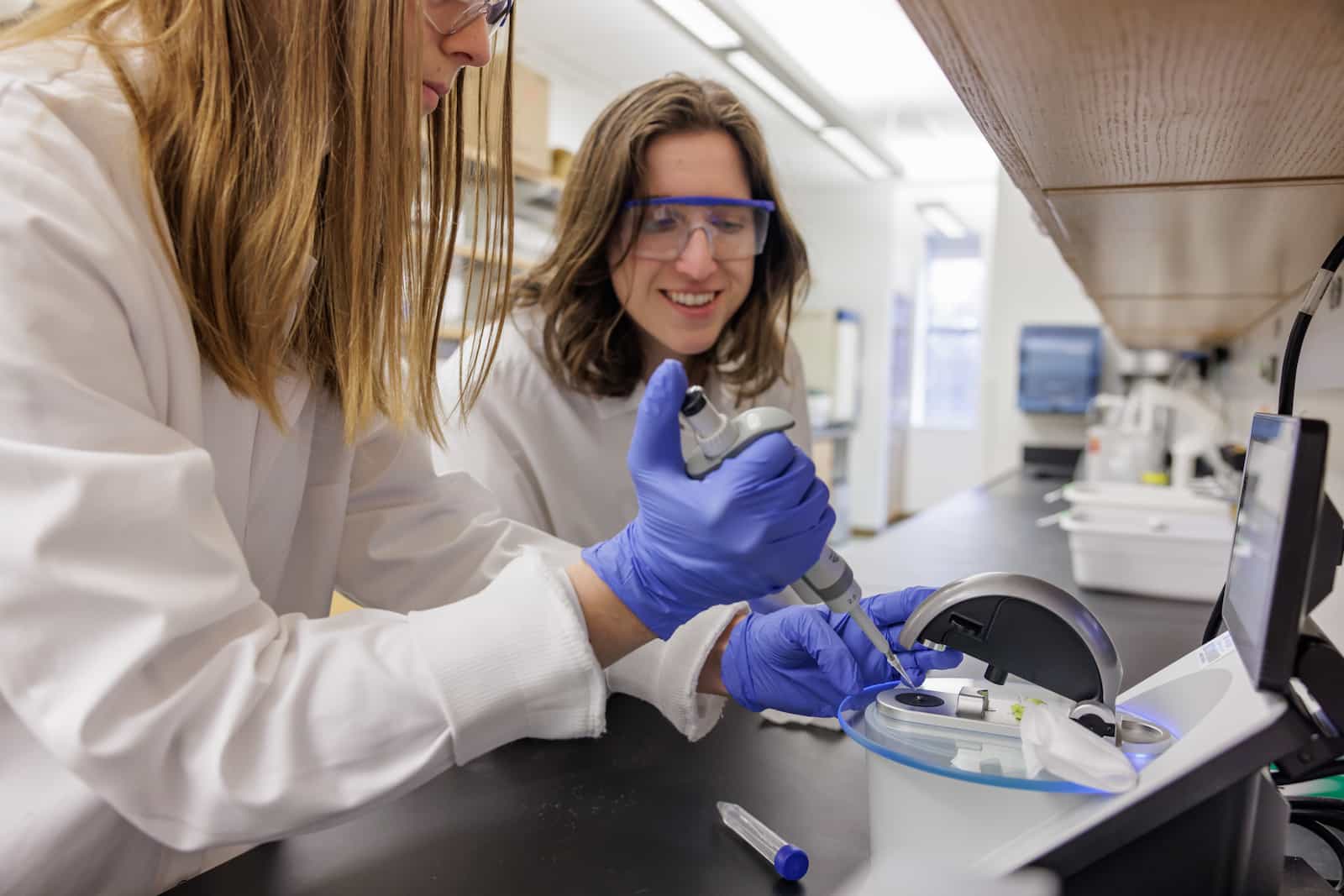
Kimberly Parker’s lab studies agrochemical volatilization, which occurs when an herbicide is applied in one field but moves through the atmosphere and can potentially cause harm to nearby crops. Photo by Rebecca K. Clark



Alvitta Ottley
Problem: Presenting health data to individuals in an understandable way
Solution: Visualization literacy
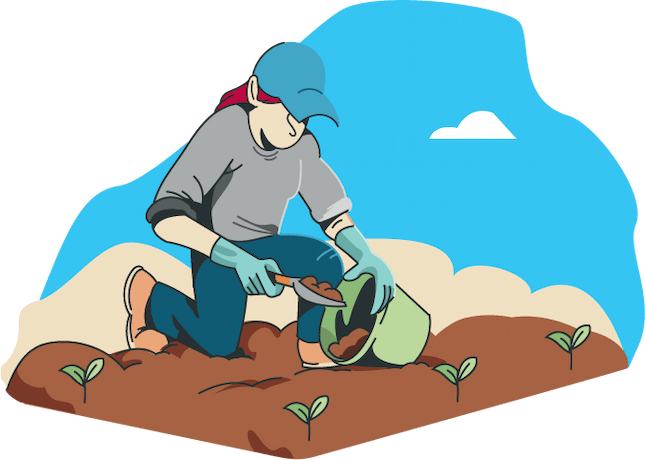
Ottley’s lab seeks to learn how people understand visual information about health, such as informational graphics and charts, and make decisions based on the information. But there are mixed ideas about how the public understands this information.
“Proponents say it makes it memorable to have designs and cartoons because it attracts attention, but these are serious topics, often about life and death, that you are communicating to a broad audience,” said Ottley, who holds a courtesy appointment in the Department of Psychological and Brain Sciences. “We need to think about not only if people understand it, but if it brings awareness to an issue or causes someone to change their behavior.”
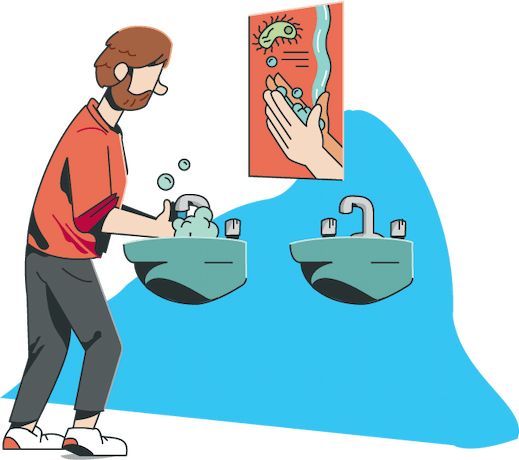
Ottley’s team scrapes the internet to see how government agencies represent data, then creates plain visualization and plain text versions of that data and asks focus groups what they recall. For example, during the COVID-19 pandemic, flyers showing the correct and incorrect way to wear face masks and how to wash hands properly were prevalent.
“If you see a piece of paper that says, ‘wash your hands,’ you might just ignore it, but if it is more eye- catching, then it is more likely that someone will wash their hands,” Ottley said. “These are the kinds of things that designers think about, and we don’t necessarily think about from an engineering perspective. But if in engineering you want to make sure that we maximize the impact of what we produce, we need to think about the design aspects.”
Ottley said her team’s goal is to create tools that would help people design things more effectively.
“We do these control studies to understand how design might affect these different measures, but we are also trying to do a large-scale analysis using computer vision techniques so that we can understand the designs people tend to use,” she said. “This might help us eventually create a tool that can help people design these more quickly and provide advice based on what common techniques there are in specific domains.”



Feng Jiao
Problem: Food production efficiency
Solution: Electro-agriculture
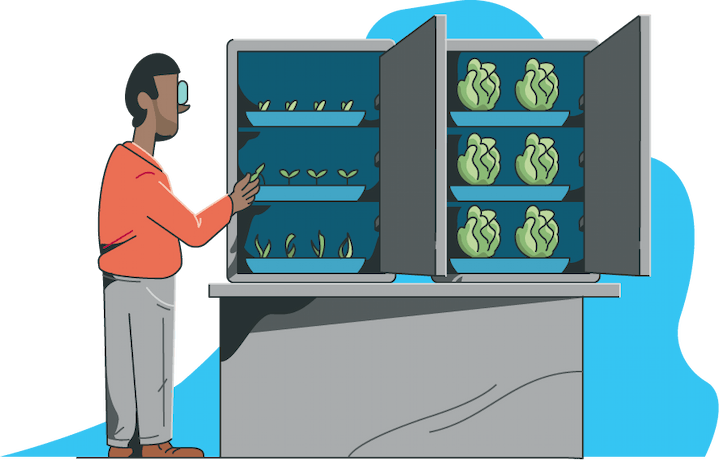
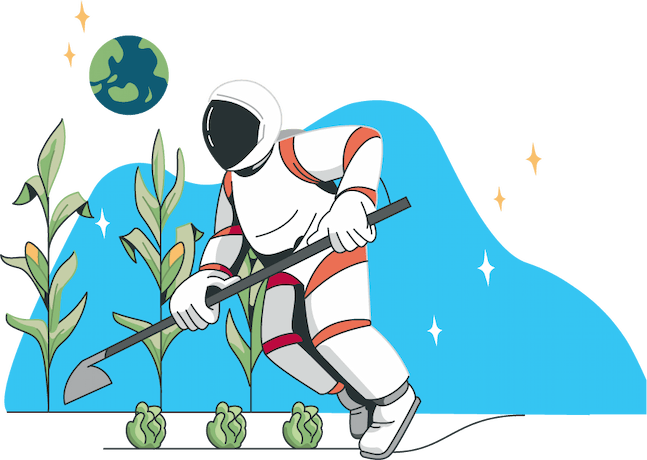
Fresh food relies onphotosynthesis to grow; however, the process is slow and requires multiple resources that make it inefficient to meet the world’s food needs. Jiao is working with Lora Iannotti, the Lauren and Lee Fixel Distinguished Professor in the WashU School of Public Health, and Robert E. Jinkerson, assistant professor at the University of California, Riverside, to create an electro-agriculture framework that combines carbon dioxide electrolysis with biological systems to boost food production efficiency. Such a system could reduce agricultural land use in the United States by nearly 90% and allow food to be grown in urban areas, deserts and even in space without light or pesticides.
“If we implement this technology in a so-called indoor farming setup, this will give us the opportunity to not only save the energy but deploy this kind of technology in densely populated regions,” said Jiao, who has a secondary appointment in the School of Public Health and is a part of the university’s Food and Agriculture Research Mission (FARM) initiative that aims to address challenges in agricultural production, food distribution and access to nutritious foods by developing practical, scalable solutions for global impact. “We’re trying to produce mushrooms, greens and tomatoes and are comparing the products we produce with our new technology versus the traditional technology to determine whether we have ways to make the nutrition even richer.”
The process works by bypassing photosynthesis and instead using a modified glyoxylate cycle to create acetate, or vinegar, as fuel instead of carbohydrates. Jiao said the process could help many people in food-scarce areas but could take five to 10 years to scale up.
“Not everyone is open to the concept of food being produced by technology, so we need the people in public health to help us connect the technology to the community,” Jiao said.
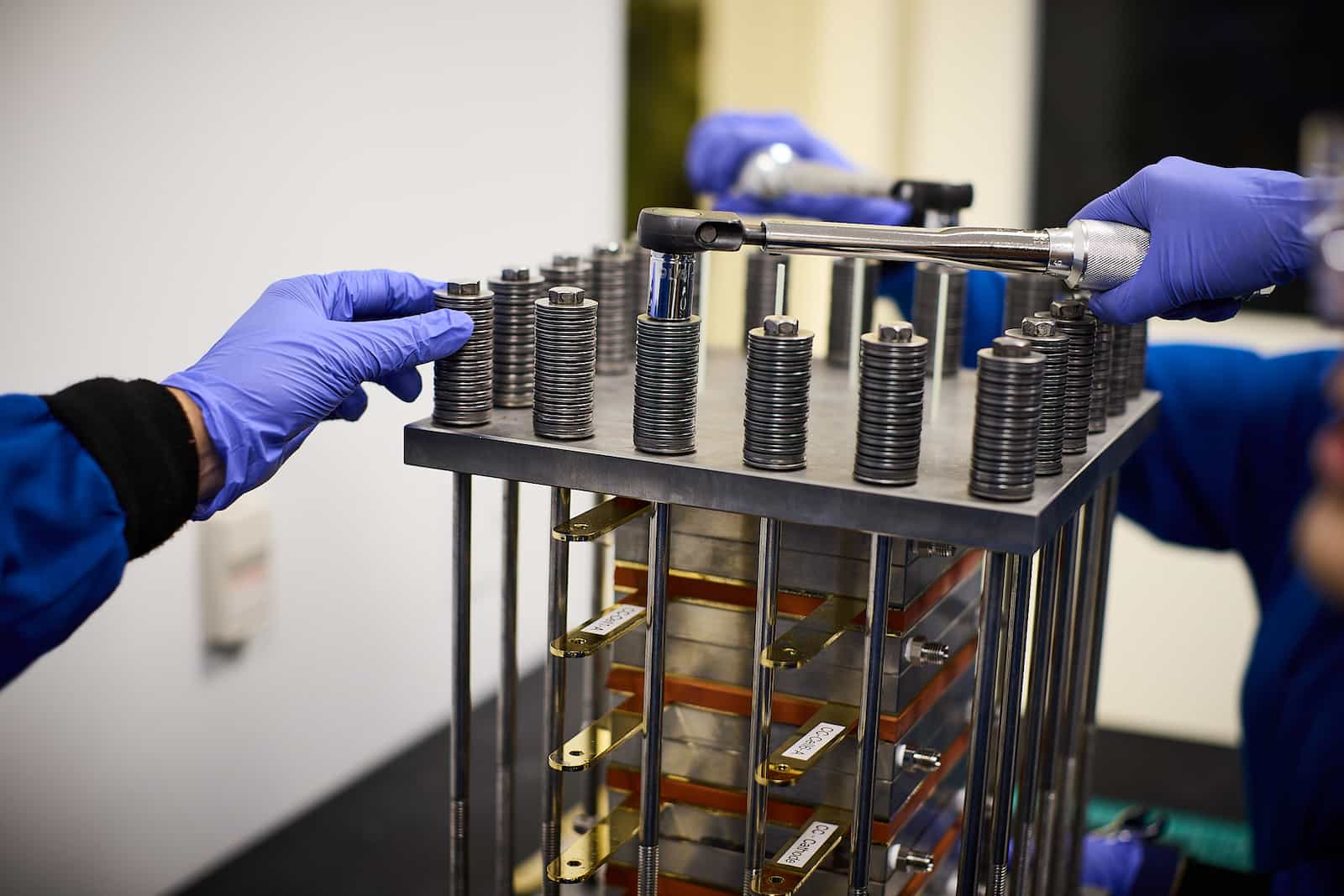
Feng Jiao’s two-step system for carbon dioxide (CO2) electrolysis works by converting CO2 into carbon monoxide (CO), then processing CO into multi-carbon products like ethylene and acetate, which can be used in the plastics and food industries. Photo by Douglas Garfield

Guy Genin
Problem: Diseases caused by biomechanical failures
Solution: Designing technologies to make populations healthier
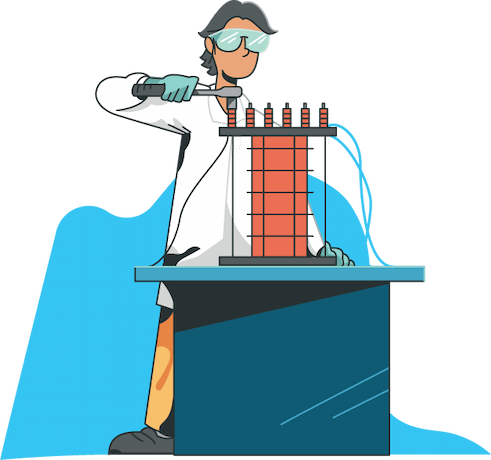
With a focus on mechanobiology, Genin’s research touches on interfaces between tissues at the attachment of tendon to bone, such as the rotator cuff in the shoulder; between cells in cardiac fibrosis; and between protein structures at the periphery of plant and animal cells.
“The first question we ask ourselves when starting a new project is what is the public health problem we’re looking at in terms of the most important medical questions in the world and how mechanobiology addresses those,” Genin said. “When we find an interesting observation in the lab, we ask how this will affect medicine and how we’re going to start curing disease.”
Genin and Eric Leuthardt, the Shi H. Huang Professor of Neurological Surgery at WashU Medicine, vice- chair for innovation and chief of the Division of Neurotechnology in the Taylor Family Department of Neurosurgery, director of the Center for Innovation in Neuroscience and Technology and an affiliate faculty member in the Department of Biomedical Engineering in McKelvey Engineering, hold invention sessions with basic scientists, clinicians and engineers several times a year to generate ideas for grant proposals or to develop a product prototype to patent and start a company. While some are medical devices, others are ways to measure outcomes across populations, both in the St. Louis area and internationally.
“We’re trying to take the diseases that affect Americans the most, and often these are diseases with a mechanical cause because we already have great cures for diseases of chemistry.”

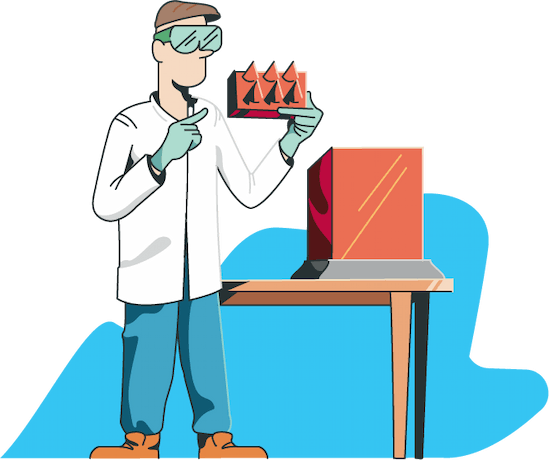
In Guy Genin’s lab, researchers are looking to curved python teeth as they develop new, stronger sutures to assist in rotator cuff surgery, which today has a high fail rate due to suture tearing. Photo by Carol Green


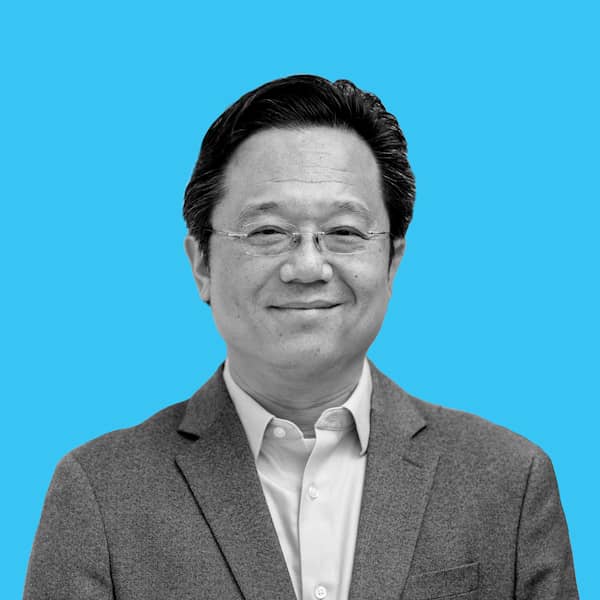
Chenyang Lu
Problem: Predicting surgical outcomes, mental health issues
Solution: Using AI to find predictors in public health data
As director of the AI for Health Institute, Lu collaborates with researchers in the School of Public Health, the Brown School and WashU Medicine using artificial intelligence to look for patterns in data that can help make predictions on a patient’s outcome and support public health at scale.
Recent work has predicted who is at risk for persistent post- surgical pain and for deterioration after hospitalization in cancer patients, outcomes of treatment for depression using wearables, as well as learning about physician burnout. Collaborative work has also focused on predicting the adherence by teens with HIV in Uganda to anti-retroviral therapy and identifying key socioeconomic factors associated with whether mothers in sub-Saharan Africa will use available health services.
“Public health policy makers and providers have the opportunity to proactively mitigate these risks at a much more precise and individualized level and at scale because we have automated tools that allow us to understand at the individual level,” said Lu, who has a secondary appointment in the School of Public Health. “There is interest in data-driven policies that’s more targeted, and there is technology enabling public health to do what they do in a much more efficient and scalable manner.”
Lu said it’s important for computer scientists and public health researchers to collaborate to learn the real problems in the public policy domain and what variables to use in their models.
“AI doesn’t work without data,” Lu said. “The public health team is working hard on the ground in underserved communities and countries to collect these data. In AI, it’s important to understand the inputs to our models, such as the social determinants of health at different levels, to establish correlation.”