
From the dean
One of the intriguing aspects of public health is the extent to which it is fundamentally interdisciplinary
In my introductory letter of the last Momentum issue, I noted how universities’ time constants were longer than most other institutions that define the context in which we operate. While often that works to our advantage — we are not as buffeted by external perturbations as some other organizations — it also means that universities tend to change slowly, perhaps not being as nimble as we might be.
But every now and then, a university makes a big change. And this has just happened at WashU — well, over the past two years, really. For the first time in a century, the university launched a new school, the School of Public Health. And then it went and hired a tremendous dean, Sandro Galea, to lead this bold endeavor. In some ways, this move was perhaps long overdue. For the past decade, WashU has had a highly ranked program in public health without an actual school. Launching a standalone school allows WashU to pursue research and deliver impact in more targeted and focused ways.
While we have always pursued such work, we can now partner with a robust School of Public Health, creating greater opportunities for impact.”
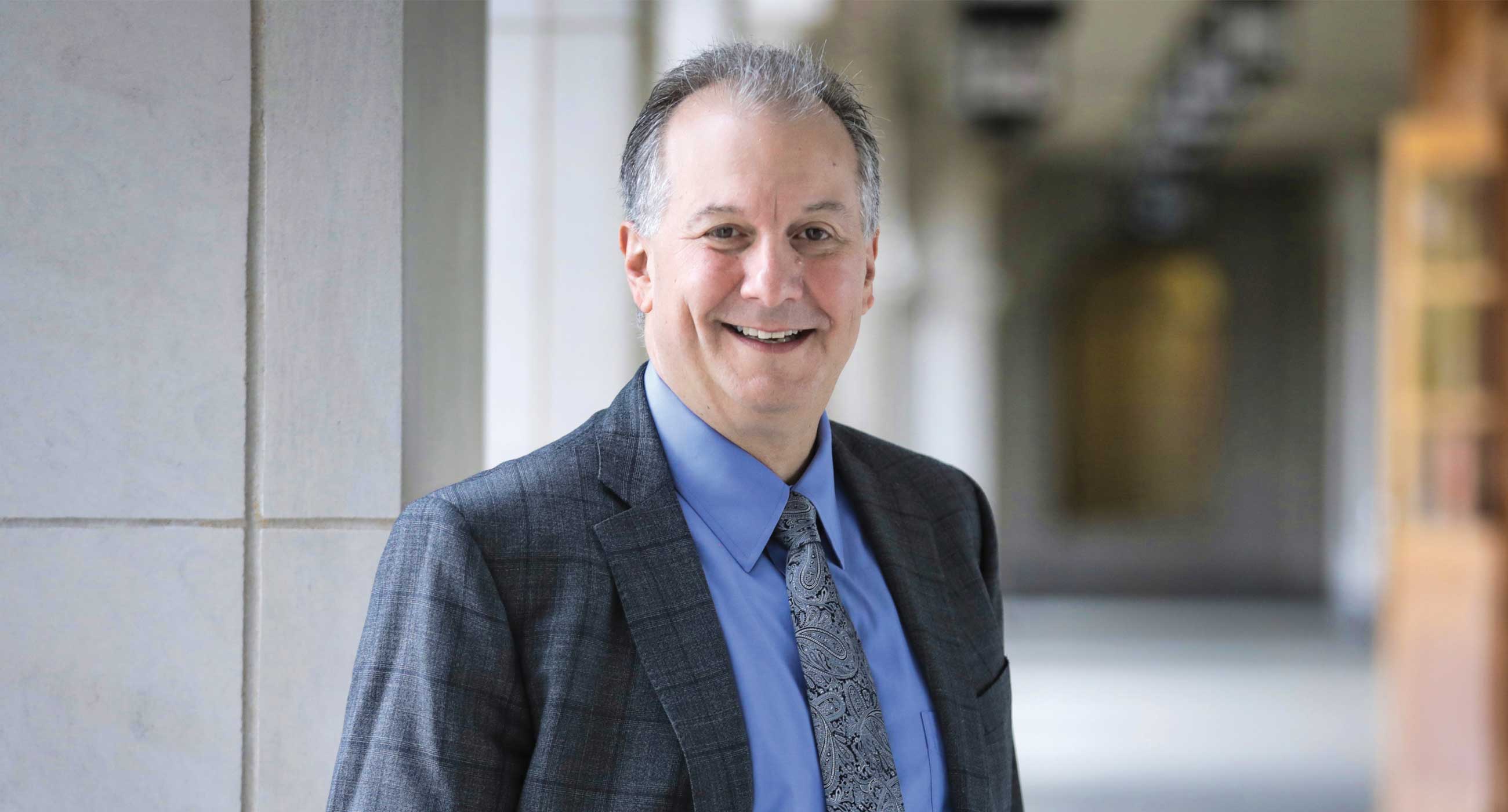
—AARON BOBICK, DEAN
One of the intriguing aspects of public health is the extent to which it is fundamentally interdisciplinary. Consider the challenge of understanding the impact of clean (or not) drinking water on communities. Such work touches, of course, on medicine and social science. But the interventions required to improve public health through improving the drinking-water supply come from engineering. Likewise, there are issues regarding the air we breathe, both indoors and outdoors: Environmental engineers study the source of contaminants, how the movement of the atmosphere interacts with the presence of harmful particles, and how indoor environments are impacted by both indoor pollution sources and the air immediately outside the environment. And in today’s world, you can count on leveraging AI to determine various environmental predictors of health challenges that are likely to arise in individuals or populations. In this issue’s cover story, you will read about McKelvey Engineering faculty pursuing research in these areas and others. While we have always pursued such work, we can now partner with a robust School of Public Health, creating greater opportunities for impact.
Before closing, I want to note the passing of Dean Ralph Quatrano. Many of our more recent alumni had the pleasure of knowing Ralph and seeing firsthand how his dedication to convergent, interdisciplinary research and education could broaden the focus of the school. Ralph had his roots in biology and brought with him the appreciation of how science and engineering together can tackle problems that neither could on their own. That legacy lives on: Just this past month a National Science Foundation Engineering Research Center proposal on quantum sensing was led by PIs from both physics in Arts & Sciences and electrical & systems engineering in McKelvey Engineering. Ralph helped to oversee the tremendous growth in hiring new, early-career faculty — a faculty whose focus on research excellence helped position the school to pursue the caliber of research it now produces. Our strength in research is a deep part of his legacy.