Mapping the dance of circadian synchrony
Researchers at WashU map the brain connections that synchronize the body’s clocks
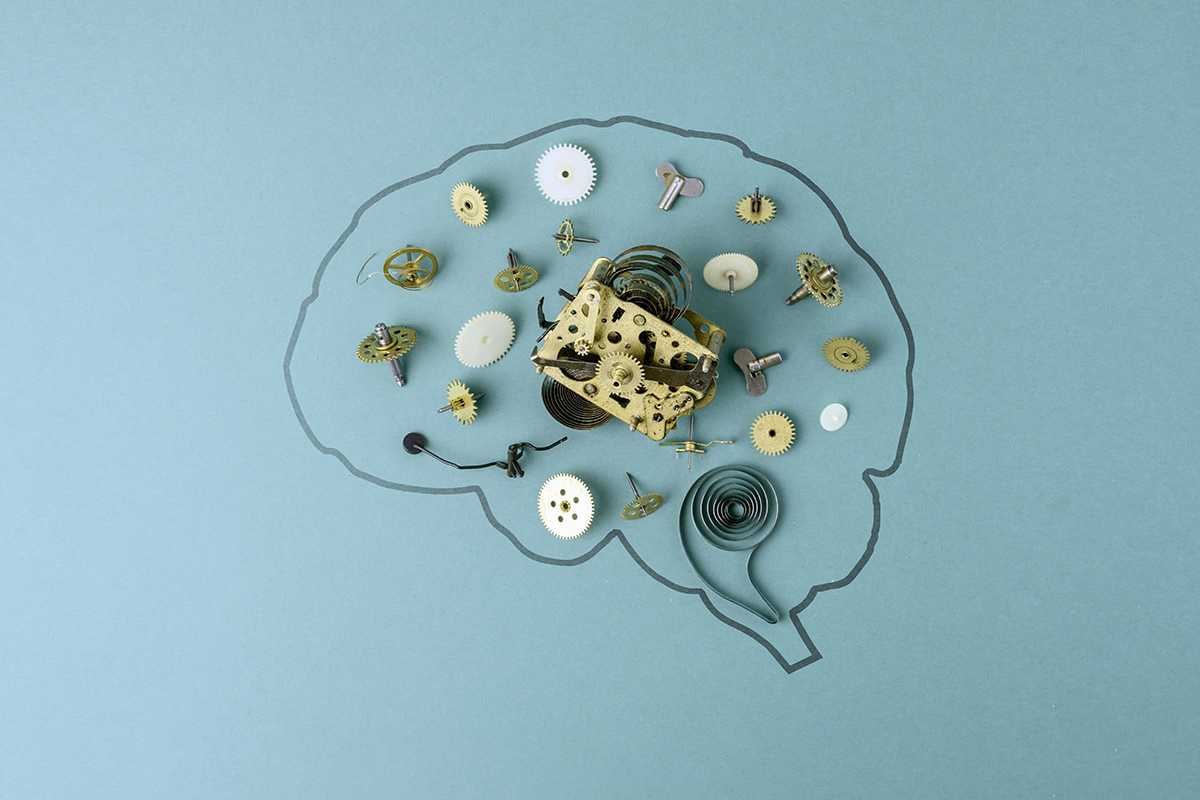
What makes someone a “morning lark” or a “night owl?” Why does jet lag hit us so hard, and why do some people struggle each winter with Seasonal Affective Disorder? Clues to these puzzles may lie in a tiny brain region called the suprachiasmatic nucleus (SCN), the body's central circadian pacemaker. The SCN contains thousands of neurons that must check in with one another to coordinate their activity and keep the body aligned to local time, but the network wiring that brings them into sync has remained unclear.
Researchers at Washington University in St. Louis developed a computational tool to reveal these connections in the mouse SCN. Their findings, published in the Proceedings of the National Academy of Sciences, show that not all SCN cells are created equal. Even though the mouse SCN has around 20,000 neurons, only a small subset of "hub" cells keep the body synchronized.
Building and comparing maps
Mapping these connections was a massive interdisciplinary effort led by KL Nikhil, research scientist, and Erik Herzog, the Viktor Hamburger Distinguished Professor in Arts & Sciences in the Department of Biology. Together with Daniel Granados-Fuentes, a senior scientist in Arts & Sciences; Jr-Shin Li, the Newton R. and Sarah Louisa Glasgow Wilson Professor of Engineering, and Bharat Singhal, a doctoral student in Li’s lab in the McKelvey School of Engineering; and chemist István Kiss from Saint Louis University, the team developed a technique called MITE (Mutual Information and Transfer Entropy, which they pronounce as ‘mighty’).
“MITE captures cellular connections by studying how signals flow between cells, moving us beyond static anatomical maps to study functional communication in living tissue,” Nikhil said.
By analyzing weeks-long recordings of gene expression with cellular resolution, “the team reconstructed more than 25 million connections among over 8,000 cells across 17 mice, with over 95% accuracy,” Herzog said.
“Think of these connections like airplane routes; we mapped the pathways to understand which SCN cells communicate with each other. We reasoned that major hubs direct traffic and represent points of vulnerability,” Nikhil said.
Reading the map
Analyzing these maps, the team identified five functional cell types defined by how broadly they connect and which partners they communicate with. Neuronal function is often defined by the molecules cells express, such as specific neuropeptides, Nikhil said.
They knew that vasoactive intestinal peptide (VIP), which is expressed by a group of SCN neurons, plays a key role in synchronizing individual cells. These findings add a new structural dimension: an even smaller subset of VIP-expressing neurons acts as highly connected hubs that generate and broadcast synchrony-promoting signals across the network, he added.
Among other cell types, there were “bridge” cells that appear to relay signals from these VIP hubs, while signals ultimately converge onto “sink” cells, which serve as major output sites that likely conveying timing signals to the rest of the body.
“It turns out that it is not just what a cell expresses, but who it communicates with, that defines its function in the network.” Nikhil noted. “Evolution appears to have optimized how different cell groups distribute roles to coordinate timekeeping.”
Using the map
To test what these wiring patterns mean for the clock as a system, the team evaluated network function using multiple approaches, including computational models where they could control and measure every connection. When they removed only hub neurons in simulations, synchrony across the network collapsed, supporting the idea that these hubs are critical to SCN timekeeping.
Next, the researchers aim to pinpoint how these hub cells exert that influence and whether targeted interventions could tune SCN timing, opening new neuroengineering strategies that realign the body clock to treat sleep and circadian disorders.
“With this approach,” Nikhil said, “we can begin to understand how clock wiring differs between ‘morning’ and ‘evening’ individuals, across seasons, and how it becomes disrupted by shift work or rapid travel across time zones.”
Nikhil KL, Singhal B, Granados-Fuentes D, Li JS, Kiss IZ, Herzog ED. The inferred functional connectome underlying circadian synchronization in the mouse suprachiasmatic nucleus. Proceedings of the National Academy of Sciences. Epub Dec. 11, 2025. DOI: http//:10.1073/pnas.2520674122.
All study data and accompanying scripts data have been deposited in GitHub (https://github.com/Herzog-Lab/Nikhil-et.-al.-PNAS-2025) (136).
Click on the topics below for more stories in those areas
Back to NewsFaculty in this story