

Fiber implant sheds new light on Alzheimer’s disease progression
Song Hu’s lab developing a fiber-based, deep-brain interface to study the relationship between neurovascular dysfunction and memory loss in Alzheimer’s disease
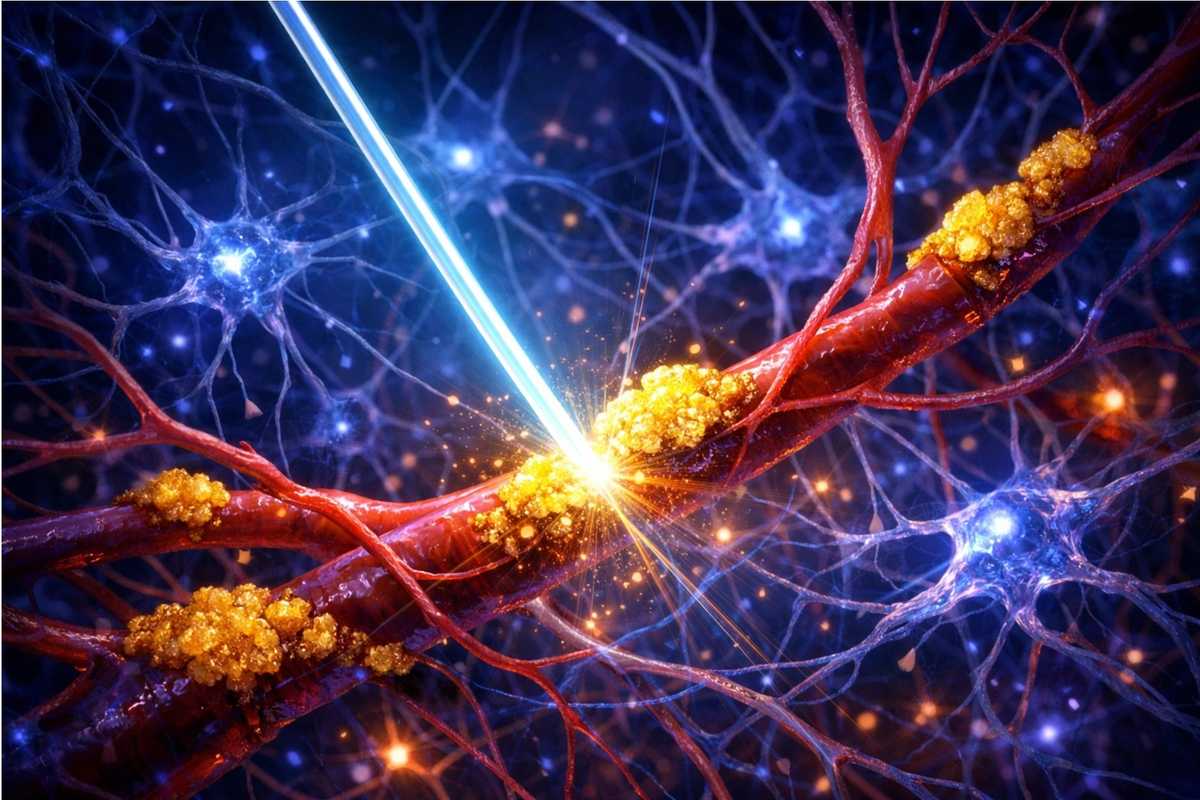
Alzheimer's disease, the most common type of dementia in older adults, begins in the hippocampus, a deep brain structure that plays a central role in learning and memory. Studying the progression of this chronic disease requires high-resolution monitoring of the deep brain over extended periods, which is challenging due to technical limitations.
Song Hu, professor of biomedical engineering in the McKelvey School of Engineering at Washington University in St. Louis, and his team are developing a hair-thin fiber implant made of biocompatible materials to enable long-term imaging and manipulation of deep brain regions in animal models. This new technology, which combines advanced imaging and targeted intervention, will allow researchers to follow how Alzheimer’s disease progresses over time and how the brain responds to experimental therapies. The research is funded by a five-year, $3.27 million grant from the National Institutes of Health’s National Institute on Aging to continue their previous initial research.
Hu’s lab studies the neurovascular system and its implications in brain disease at the cellular level. However, existing benchtop microscopy technologies penetrate only about a millimeter, which does not provide full access to the parts of the brain most affected by neurological disorders such as Alzheimer’s and Parkinson’s diseases.
The team is developing a minimally invasive fiber implant that’s a fraction of a millimeter thick — slightly wider than a human hair. Made of biocompatible and inert glass, the implant causes minimal reaction with brain tissue and can stay implanted for roughly nine months, which should give researchers sufficient time to study the chronic progression of Alzheimer’s disease.
“We want to understand what happens to the neurovascular unit and neurovascular coupling in the deep brain region that is first affected by this disease over time,” Hu said. “This fiber technology allows us to bring powerful optical methods, including photoacoustic microscopy and two-photon microscopy, that normally work only at the brain surface, into deep brain regions, while preserving cellular resolution and comprehensive neurovascular information.”
The implant will allow the research team to test some of the hypotheses derived from their prior studies, including that memory loss from the hippocampus is driven by impaired blood oxygen supply; that the reduced blood oxygen supply is secondary to amyloid pathology in brain vessels; and that restoring blood oxygen supply to the brain can improve memory loss.
The project brings together a multidisciplinary team. Hu’s lab is collaborating with Xiaoting Jia, professor in the Bradley Department of Electrical and Computer Engineering at Virginia Tech, who will develop the fiber components for electrical stimulation and drug delivery, and Harald Sontheimer, professor and chair of the Department of Neuroscience at the University of Virginia, who will develop long-term implantation protocols for the application in animal models of Alzheimer’s disease.
The advanced capabilities of the bidirectional fiber implant, particularly its ability to repeatedly access the same deep brain region over many months, are essential to unravel the temporal relationship between amyloid pathology, neurovascular dysfunction and memory loss in Alzheimer’s disease, Hu said.
“Access to the hippocampus is critical, as it is one of the first regions affected in Alzheimer’s disease and is directly linked to memory loss,” he said. “Using photoacoustic and two-photon microscopy will allow us to assess how vascular amyloid pathology affects blood oxygen supply, and the microfluidic drug delivery will allow us to test whether blood oxygen supply can be restored using a vasodilator and whether it improves memory.”
Click on the topics below for more stories in those areas
Back to NewsFaculty in this story