McKelvey Engineering students design device tailored to fit needs of visually impaired
The Locus Suit enables independent navigation
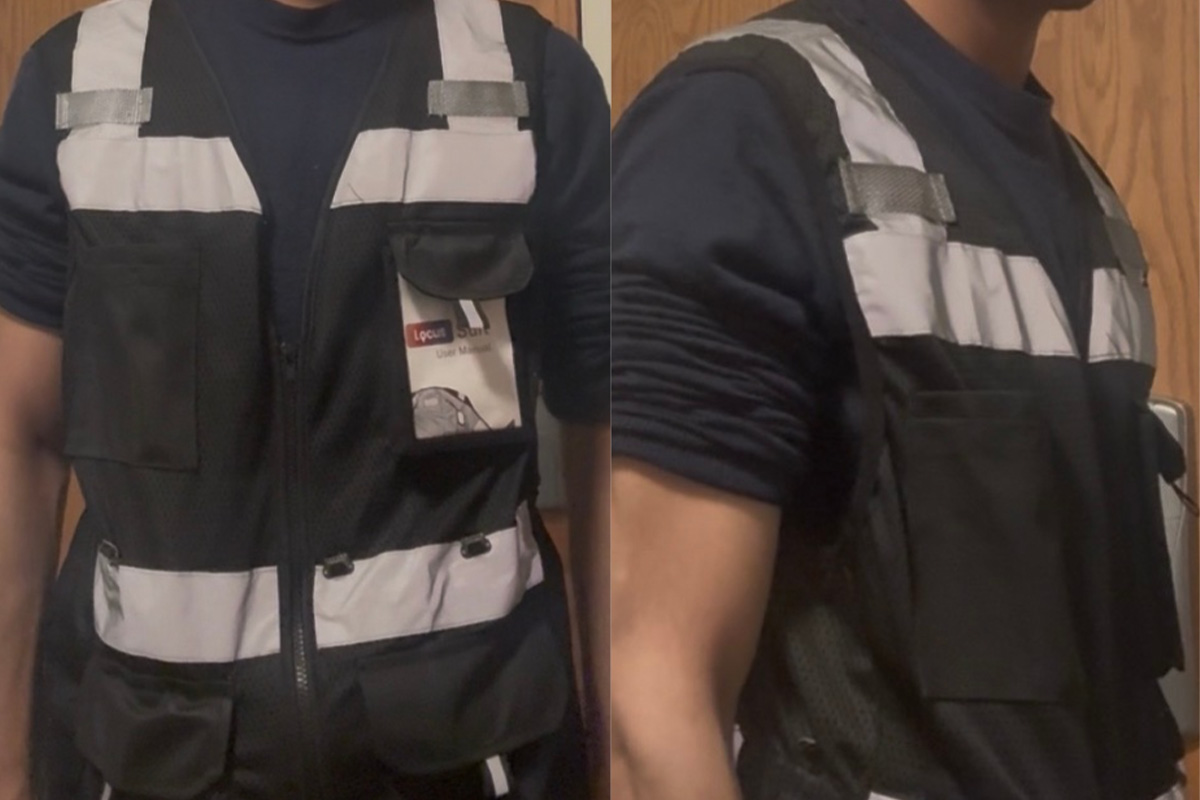
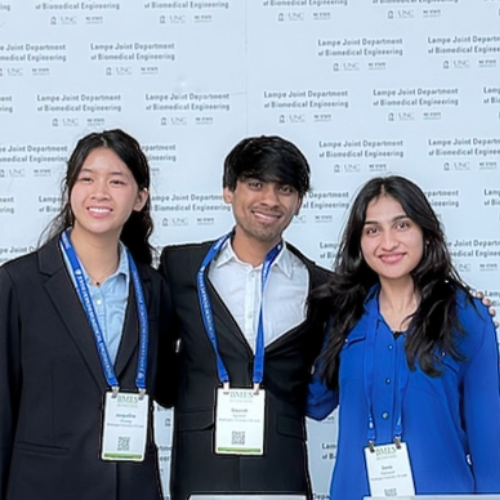
McKelvey Engineering students Gaurish Agrawal, a sophomore majoring in mechanical engineering, Jacqueline Chuang, a sophomore majoring in biomedical engineering, and Sonia Palamand, a junior majoring in electrical engineering, have been working on a wearable device that enhances spatial awareness, supporting safer, more confident and independent navigation for blind and visually impaired users. The system combines a sensory vest with a camera module to provide near-field awareness of the surrounding environment. Detected obstacles are translated into directional vibration patterns on the torso, allowing users to perceive nearby structures without vision.
Learn more from the team below.
How did the idea for the Locus Suit come together?
The idea for the Locus Suit grew out of both personal experience and hands-on design work. For us, it began when a family member started losing their vision. Seeing that up close made us realize how little day-to-day mobility support exists for people living with vision loss, especially outside of surgery or clinical care.
At WashU, one experience that really shaped our thinking was a course called When I’m 64, offered through Beyond Boundaries and Psychology. In that class, students spend the semester learning alongside older adults from the Clayton community. In one of our activities, students walked around campus while wearing equipment that simulated different forms of vision loss, including complete blindness, glaucoma, cataracts and diabetic retinopathy. The goal was to experience how everyday spaces can become much harder to navigate when vision is blurred, blocked, narrowed or partially missing. Even common parts of campus design started to feel difficult, from reading signs and spotting steps to judging distance, noticing obstacles and moving through crowded walkways. That experience made clear how much of everyday design still assumes a fully able user and how easily accessibility can be overlooked. It changed the way we thought about vision, its waning with age and what meaningful support should look like.
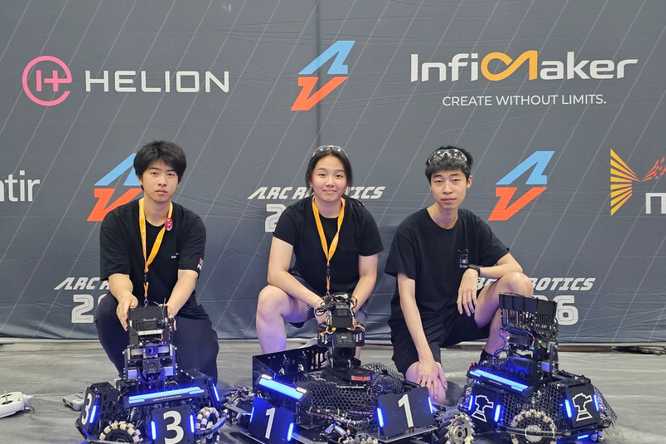
The project began to take shape within the WashU Robotics Team, where we are team leads. Working with a small group, we built early prototypes that started as a shoe-based brace. Over time, we kept testing, learning and rethinking the form. Eventually, we moved beyond those first designs and began developing the system into what was an early version of a torso mounted device. Through many iterations, we eventually came to the vest-like form factor. What truly made the idea feel real was speaking directly with visually impaired users and caregivers. Those conversations made our purpose much clearer. People wanted something wearable, intuitive and supportive in everyday life. The Locus Suit came out of that process of listening closely, building carefully and continuing to refine the idea based on evolving needs and conversations.
What unique value does it provide?
Locus Suit represents a system of a sensory vest and optical module that together provide a detailed sense of space around a user. Through a combination of tactile feedback and circumferential proximity mapping in a hands-free design, it communicates nearby obstacles and navigational context without relying on sight. It is designed for crowded and architecturally complex environments that often fall outside traditional accessibility design, such as overhead hazards, uneven surfaces or narrow stalls. It serves as a first step toward rethinking how sensing and hardware design can extend traditional, but functionally limited, tools like canes or braille displays.
What are some successes you have experienced with Locus Suit to date?
The project has reached several exciting milestones. We were winners of the Skandalaris Venture Competition, the NIH Biomedical Design Challenge, the VentureWell Pioneer Grant, the SAME Innovation Challenge and have recently made it to Sling Health Nationals in New Orleans.
Still, the part of this journey that has meant the most to us has been working with local organizations like the Council of the Blind, the Missouri Assistive Technology Council and members of the STL Village. Being able to see our work with people who are affected by these challenges has kept us centered on real human needs. That is perhaps the most valuable form of validation we have received.
What are the next steps for Locus Suit?
We want to continue to talk within the community. More than anything, we want the project to stay rooted in accessibility and inclusivity. Our focus is to make sure the work contributes something meaningful and inspires others, students and alike, to build in the assistive technology space. We did not begin this project expecting any of these awards — it grew out of a shared interest. In fact, submitting to the first competition was a last-minute decision, and a lot of that just came from us revising all the components over summer for submission. Of course, the recognition has been exciting, but the most valuable part has been growing together. Recently we were invited to Boston as the first undergraduate team in WashU’s history to win the Pioneer grant, and it was an incredible experience to meet leaders in the fields of medicine and learn about the principles of innovation that will be applicable to our current and future projects, at university and beyond.
How did you come up with the name for this innovation?
Initially we didn't really have an official name, and when we needed one, we coincidentally were taking some biology courses and learning about chromosomes. The word locus refers to the specific position of a gene on a chromosome, and in a broad sense, these genes are what often contribute some of the worst cases of irreversible vision loss. The root “loc” also suggests location and place, and it was easy to pronounce.
How has the WashU community helped make Locus Suit a success?
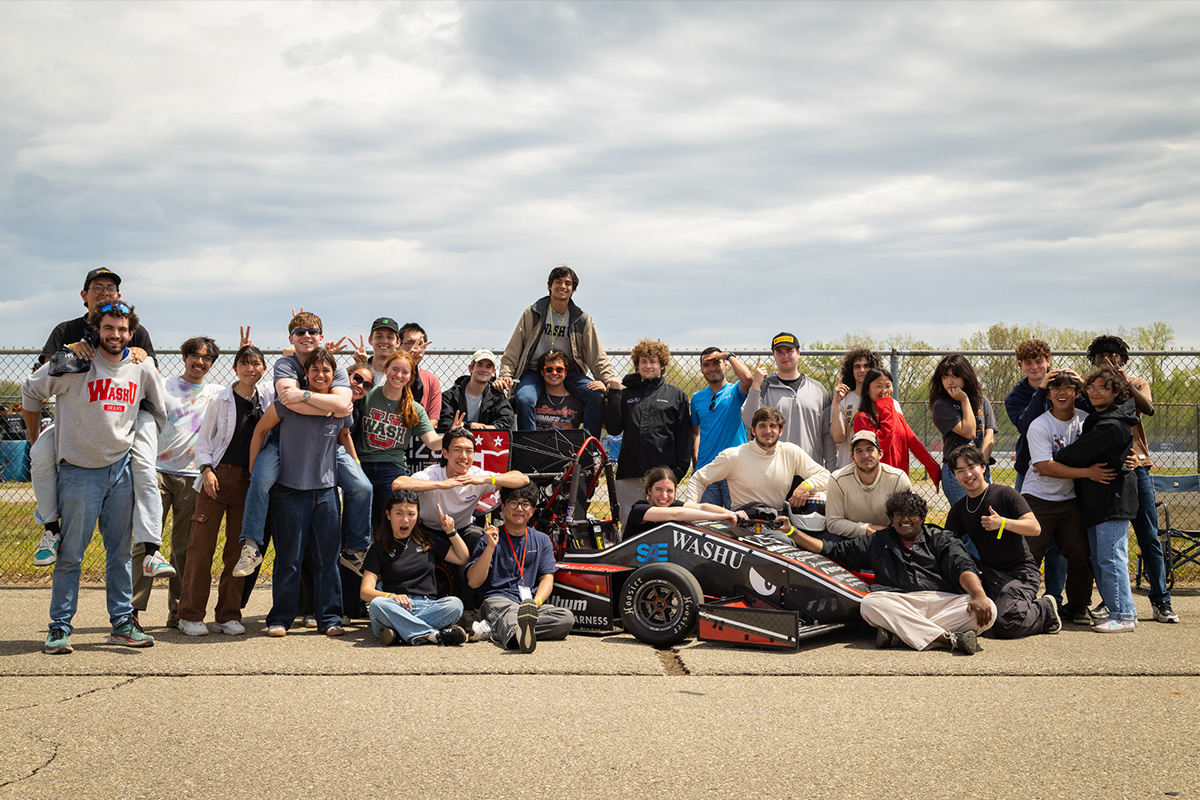
One of our biggest supporters has been Dr. Joe Klaesner (professor of practice in the Department of Biomedical Engineering). He has supported Locus Suit through several stages, like the Skandalaris Competition and Sling Health. Another important supporter has been the staff at the Skandalaris Center, notably Yannic Dosenbach (venture development specialist). He has always been there for advice and has really helped us learn how to take a project from idea to impact. Also, a shoutout to our Hybrid Body team at WashU Robotics! We may not have been able to come so far without early contributions from former members, including Leon Zhao, Max Saltrelli, Lydia Mazeeva and other students who helped test and give feedback. Even though Locus has largely developed outside of the club, all the members, including many new recruits this year, are doing incredible work! This time we are taking on a new engineering challenge, focused on developing a pocket-sized device to assist those living with Alzheimer’s disease, in collaboration with the (Charles F. and Joanne) Knight Alzheimer Disease Research Center at WashU Medicine. And we are all excited to see how that shapes up.
What advice would you give to other engineering students with an innovative idea?
We would say to just start, even if the idea still feels rough. A lot of people think you need a finalized plan or all the knowledge in the world. But usually you just start with sketches, blow up a few PCBs (printed circuit boards), learn from those around you, and it's a lot of going back and rethinking. Even today we continue to experiment with our internals as we talk with the community. Some of our best progress has come from doing something, realizing we got it wrong and trying all over again. That process can be frustrating, but it's where we all learn.
Click on the topics below for more stories in those areas
- Undergraduate Students
- Electrical & Systems Engineering
- Biomedical Engineering
- Mechanical Engineering & Materials Science