Mixed plastic waste target of upcycling process to cut waste, emissions
Christopher Cooper tackles plastic upcycling with ARPA-E grant
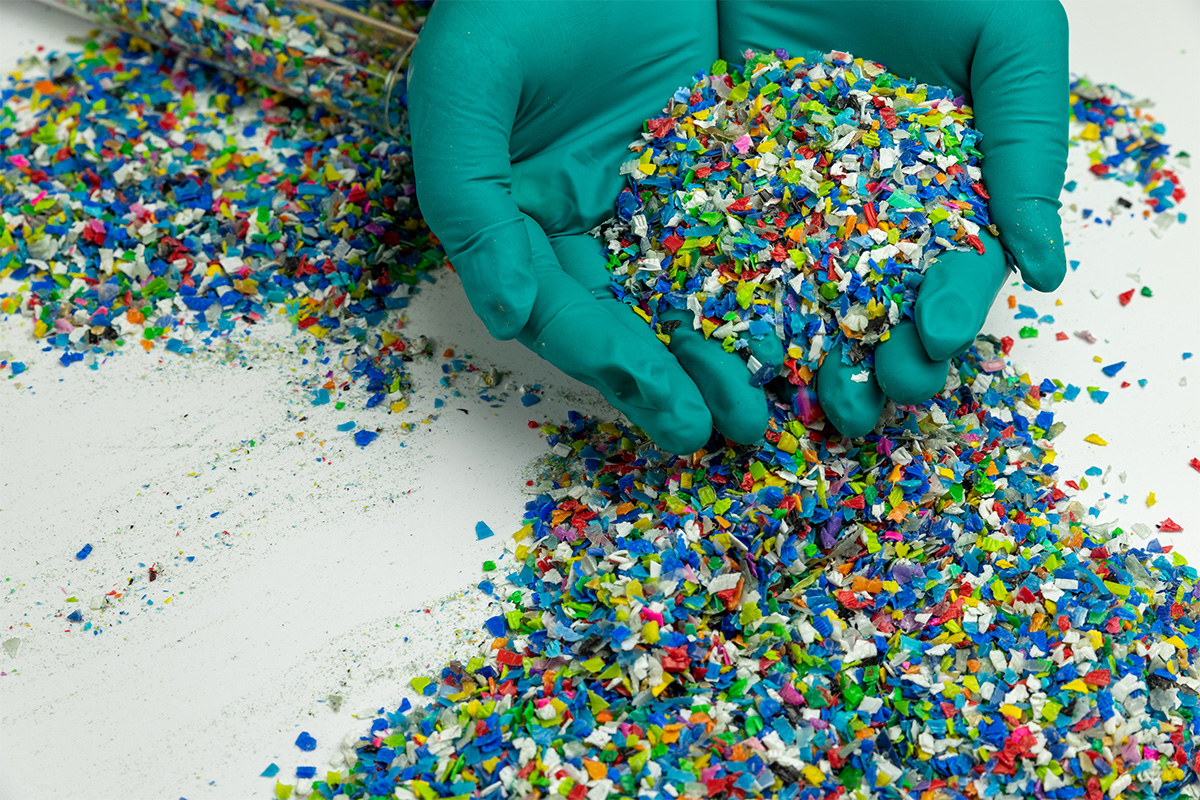
More than 5 billion pounds of plastic is recycled every year, but there are limitations: the cost to do so is often expensive, and plastic degrades over time, so it can only be recycled once or twice, creating opportunities for more practical alternatives.
Christopher Cooper, assistant professor of energy, environmental & chemical engineering in the McKelvey School of Engineering at Washington University in St. Louis, is developing a two-step process to recycle pure and mixed plastics by breaking them down into pieces and rebuilding the pieces into new materials. He will develop the process with a $500,000, 2025 Inspiring Generations of New Innovators to Impact Technologies in Energy (IGNIITE) grant from the U.S. Department of Energy’s Advanced Research Projects Agency – Energy (ARPA-E). The IGNIITE program funds early-career scientists and engineers whose work can turn disruptive, unconventional, high-risk, high-reward ideas into transformative technologies. Cooper was one of 18 early career scientists to receive a total of up to $10 million in grants through the program.
Cooper will work with post-consumer single-stream and polyolefin waste made from polyolefins, including polyethylene and polypropylene and derived from natural gas or petroleum. First, his process will break down the polyolefins into smaller parts, then reconnect them with urethane-based dynamic bonds to create upcycled dynamic polymers that are durable and mechanically recyclable. This technology is expected improve the ability to reuse polyolefin waste, which currently accounts for 50% of all plastics, with more than 200 million tons of polyolefins produced every year in the U.S.
“We plan for this process to create kilogram-scale, solvent-free upcycling of these post-consumer polyolefins into dynamic polymers with mechanical properties that are comparable to or exceeding new plastics and have the ability to be recycled without degrading,” Cooper said. “This process would eliminate 50% of global plastic waste and cut 75% of their associated carbon dioxide emissions required for virgin production, or about 270 million tons a year.”
The process will face the challenges of integrating multiple technical developments that have not yet been applied to mixed polyolefin waste or evaluated against impurities.
Click on the topics below for more stories in those areas
Back to NewsFaculty in this story