

Cracking complex networks with partial data
Researchers in the lab of Jr-Shin Li develop a workaround to unearth connections between different nodes in complex networks
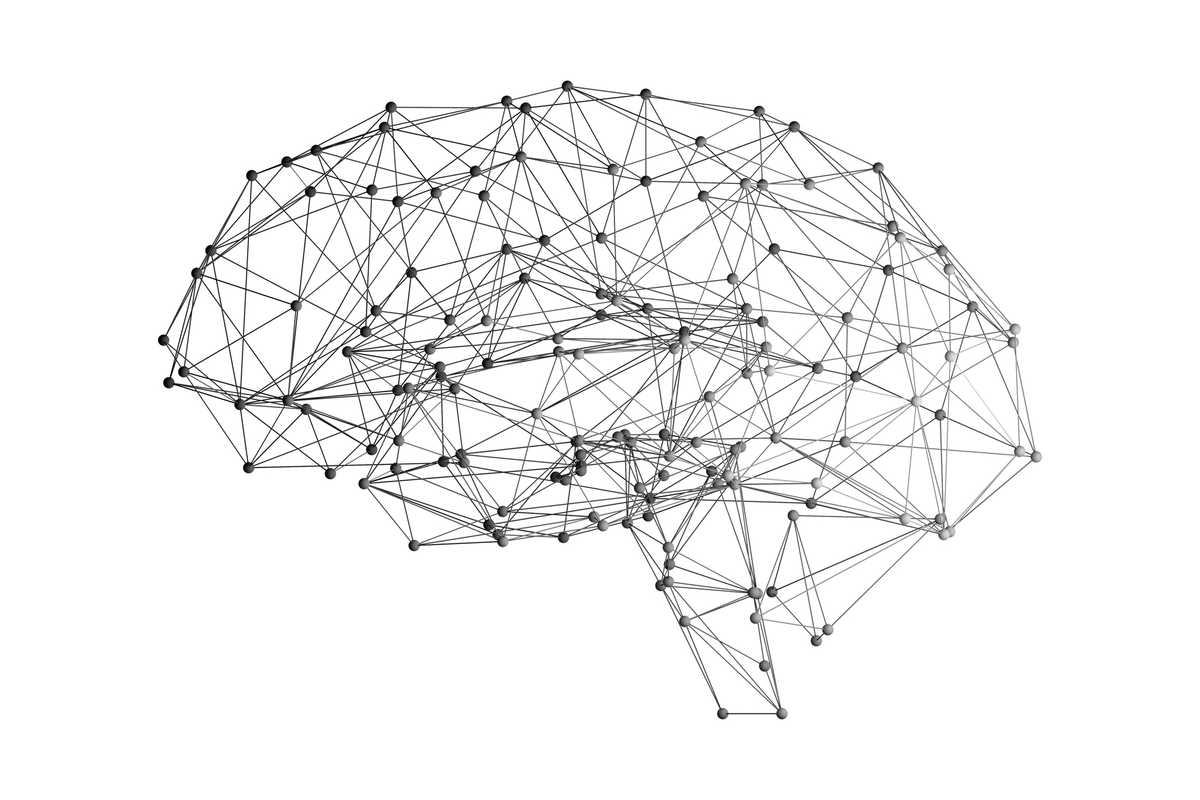
From electricity grids to the human brain, the systems we rely on are vast networks of interacting components, each slightly different from the other. How does such a large group of heterogeneous components act as one and execute their functions? Getting to the answer will need an understanding of who influences whom in the network — and how.
Reconstructing large networks like the human brain with thousands of neuron “nodes” is challenging because each node is complex with many internal variables controlling its actions. Ideally, to fully understand network connectivity, we would measure each of the many variables for each of the nodes and link them all together.
Unfortunately, reality is far from ideal.
Given that more than 20 internal signals drive the behavior of a single neuron, measuring all of them across tens of thousands of neurons is close to impossible. Jr-Shin Li in the McKelvey School of Engineering at Washington University in St. Louis and team explored an alternative: What if we could measure only one signal per node?
Their research, published in PNAS Nexus, shows that network reconstruction under such constraints is indeed possible.
“If we can get just a single measurement from each system, it will be sufficient for us to leverage a mathematical instrument termed forced time-delay embedding to decode the connectivity of large-scale networked systems of interest,” said Bharat Singhal, who earned a doctorate in systems science in 2025 in the lab of Li, the Newton R. and Sarah Louisa Glasgow Wilson Professor in the Preston M. Green Department of Electrical & Systems Engineering at WashU.
Time-delay embedding works on the principle that even if you measure only one variable, its past values can tell us about how the system might behave next.
“Focusing on one node at a time, and treating signals from other nodes as external inputs, we can model how the node under evaluation is likely to behave based on its own past behavior and the activity of other nodes,” Li said.
For example, if node B’s signal can help explain node A’s behavior, then the two are likely connected. When repeated for each node, it’s possible to reconstruct the entire network.
The process underwrites a framework called Network Inference from Partial States (NIPS), which Singhal tested for 1,000 nodes but can be extended to any number.
“The only limitation is that the more nodes you have, the longer you need to observe the system,” he said.
In many practical scenarios, it’s only possible to measure a subset of nodes, but this challenge is being addressed.
Information about the dependencies of nodes in a network can be useful in a number of ways. In an electricity grid, for example, information about generator frequency from power generators can help map out the connectivity between power lines. Technicians can use this map as a basis for normal functioning and contrast that against connectivity maps for when there’s a power disruption, to pinpoint where the links between generators are broken.
As for circadian rhythms, understanding neuron connectivity can help scientists explore how connectivity changes affect sleep patterns. Studying how patients’ neuron connectivity varies can also be used as a diagnostic tool to evaluate sleep disorders.
Singhal B, Kiss IZ, Li J-S. NIPS: Network Inference with Partial State measurements using forced-delay embedding. PNAS Nexus, Volume 5, Issue 1, January 2026. DOI: https://doi.org/10.1093/pnasnexus/pgaf397
This research was supported in part by the National Institute of General Medical Sciences of the National Institutes of Health (R01GM157609), and by the National Institutes of Health (R01NS139415).