

Putting some ‘muscle’ into material design
Engineers create biomaterial that behaves like animal muscle fibers
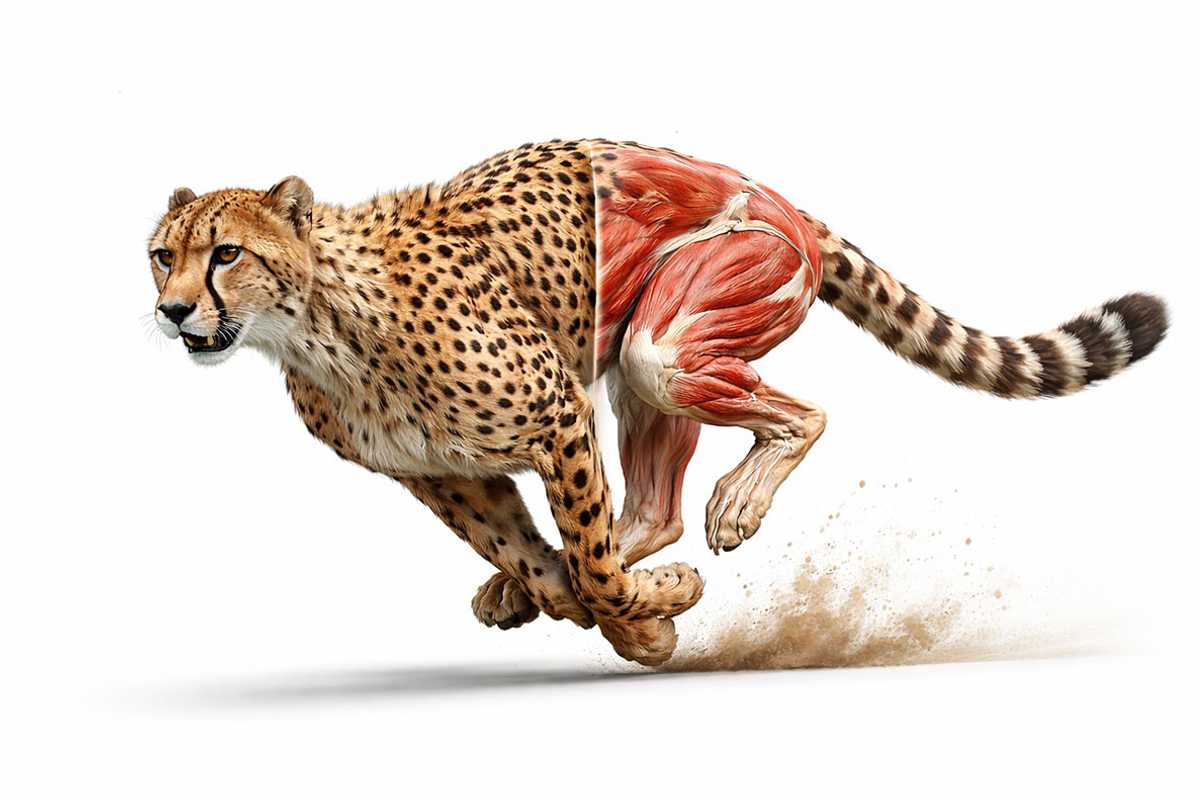
Natural muscle fibers are made up of spring-like proteins that can contract and stretch without losing their original form, dissipate mechanical energy as heat, and maintain incredible tensile strength for all sorts of physical functions. Engineers at Washington University in St. Louis have replicated those proteins using synthetic biology approaches to create a new category of biomaterials for use in medicine, textiles and agriculture.
“Many muscle proteins share similar immunoglobulin-like (Ig) structures while bearing diverse amino acid sequences. These natural materials provide great inspiration for designing the next-generation of protein-based materials”, said Fuzhong Zhang, the Francis F. Ahmann Professor in the Department of Energy, Environmental & Chemical Engineering and co-director of the Synthetic Biology Manufacturing of Advanced Materials Research Center (SMARC). Zhang and his team, including PhD student and first author Shri Venkatesh Subramani, have published results of the fiber fabrication in the journal Advanced Functional Materials.
Subramani explained that nature has evolved numerous protein materials, like silk, collagen and muscle. They are often useful for various applications, yet they are notoriously difficult to manufacture at scale, so Zhang’s lab takes a synthetic biology approach, growing genetically modified microbes in bioreactors to produce them. In this case, the team created various muscle proteins in bioreactors and turned them into threads, strong threads unlike any other.
Working in collaboration with Sinan Keten, the Jan & Marcia Achenbach Professor in the Department of Mechanical Engineering at Northwestern University, and his research group, the team used these muscle-inspired fibers to understand the design rules that can lead to an ideal material product. The team found that fibers derived from the filamin protein showed a combination of high tensile strength, toughness, damping capacity, shape recovery and remarkable mechanical stability under high humidity and high heat conditions.
“The more hydrophobic the structure is, the better fiber properties you get,” said Subramani.
The fiber is superior to the current roster of protein-based materials in that it does not shrink much under high humidity, a problem that limits the application of many spider silk-based materials.
The process of producing the protein is also more stable and provides higher yields because of the greater variety of amino acids it includes, compared to other PBMs, noted Subramani.
“That’s one limitation of existing materials that we’ve solved,” he said.
There are many other applications for these new fibers. Next step for the research is to scale up production and evaluate its potential in different markets. It could be a very valuable material for use in designing active wear, biomedical implants, tissue scaffolds and even creating “fake meat.”
Animal-based protein is just muscle fiber, what if they could grow that muscle without the animal?
“Since these are just regular muscle proteins that have the same processes as animal muscle. It can be processed into a meat-like structure,” said Subramani.
V. Subramani, Q. Guo, H. Gao, et al. “ Muscle-Inspired Fibers from Immunoglobulin Domains Combine Superior Mechanical Performance, Energy Damping, and Shape Memory Properties.” Advanced Functional Materials (2026): e29451. https://doi.org/10.1002/adfm.202529451
This work is funded by the U.S. National Science Foundation (award numbers DMR-2207879 to FZ and OIA-2219142 to FZ and SK).
Click on the topics below for more stories in those areas
Back to NewsFaculty in this story

Fuzhong Zhang

Shri Venkatesh Subramani
In the Media
Bioengineer.org: Flexing Strength in Material Design: Science Breakthroughs That Pack a Punch