Edible protein made from waste carbon dioxide using artificial photosynthesis
Joshua Yuan’s lab creates meat alternative through electro-biomanufacturing
While many people think first of meat when they think about dietary protein, protein depends on plants for both plant- and animal-based protein, since livestock feed on grass, hay and other plants. Meeting the demand for protein is taxing on the environment, requiring massive amounts of land and water while creating greenhouse gas emissions. And that demand is expected to require nearly 50% more agriculture production by 2050 than in 2012, according to the U.N. Food and Agriculture Organization.
What if a highly nutritious, sustainable protein could be created without that high environmental demand, instead using artificial photosynthesis to drive waste carbon dioxide use? A team of researchers in the McKelvey School of Engineering at Washington University in St. Louis answered that question by creating a high-protein edible biomass from carbon dioxide using electrocatalysis. Results of the research were published Nov. 20 in One Earth.
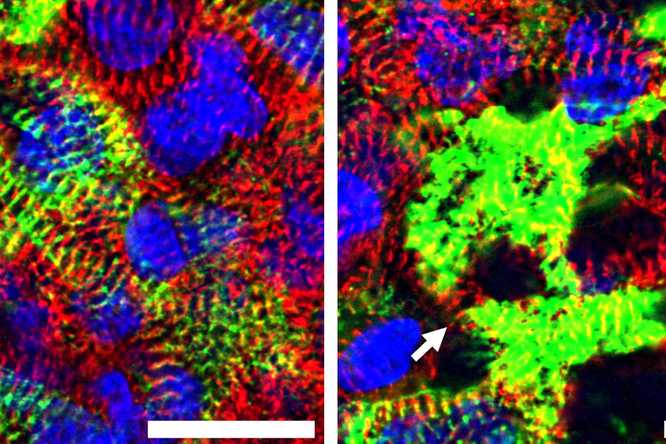
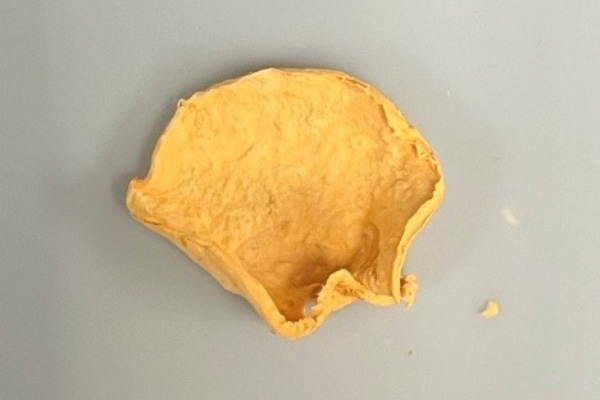
Joshua Yuan, the Lucy & Stanley Lopata Professor and chair of the Department of Energy, Environmental & Chemical Engineering and director of the National Science Foundation-funded Engineering Research Center for Carbon Utilization Redesign through Biomanufacturing-Empowered Decarbonization (CURB), and Wei Wei, a doctoral student in his lab, developed a system that turns waste carbon dioxide into protein-rich Neurospora intermedia, a fast-growing edible fungus. Its core is a copper-gold tandem catalyst that helped to turn carbon dioxide into intermediate molecules that the fungus used to grow, while reducing unwanted byproducts that would interfere with its growth.
“Most catalysts are designed simply to make as much of the main product as possible, but this fungus is a picky eater,” Wei said. “It grows well on ethanol and acetate but is inhibited by formate, so we designed the catalyst around what the fungus needs.”
“We have already used the electro-biomanufacturing system we developed through CURB to produce plastics, biodiesel and different chemicals with waste carbon dioxide,” Yuan said. “We wanted to see if this system could be used to address food shortages and boost nutrition, and this study demonstrates that.”
While Neurospora intermedia may sound unusual to those in the U.S., it’s used to make oncom, a fermented food in Indonesia, and is similar to the fungus-based meat alternatives currently sold in the U.S. In addition to protein, it also has beta carotene, B vitamins and heart-healthy unsaturated fatty acids.
Neurospora intermedia biomass contains 48.5% protein, substantially higher than beef at 20.4% or soy at 36%. It takes only seven days to produce, while beef requires 645 days and soy requires 122 days. Producing 1 kilogram protein from Neurospora intermedia takes about 794 kilograms or liters of water to produce, which is considerably less than the nearly 5,970 kilograms or liters of water to grow soybeans and 75,600 kilograms or liters of water to produce from beef. Moreover, the system converts sunlight into edible biomass at 4.35% efficiency, about nine times that of soybeans. And it produces 22 times more protein per unit of land than soybeans and 513 times more than beef. Powered by solar or wind electricity, the process could have net-negative greenhouse gas emissions over its life cycle, Yuan said.
Yuan’s lab now plans to create a product that would be accepted by consumers as a viable protein alternative.
“We want to scale up our production and commercialize the product as an affordable high-protein alternative to help address the problem of food insecurity or food deserts around the U.S.,” Yuan said. “It could also be used for space missions, in times of threats to national security and to improve public health.”
One of the missions of CURB is to scale up electro- biomanufacturing systems developed in the lab into startup companies that will translate the research into products available for the community. Already, CURB researchers have formed one startup company and are in the process of starting another. A startup to scale up and commercialize this process would be the third, Yuan said.
“CURB’s goals are to develop the engineering system that creates the products that will transform society,” Yuan said. “We have had excellent support from WashU, WashU Office of Technology Management, our other partner institutions and industries. We are excited to see this develop.”
Wei W, Hu Q, Chen Y, Kwon Y, Xi S, Liu M, Chen K, Li W, Fei CJ, Dai SY, Chang Q, Yuan JS. Tandem catalysis and bioprocess co-design enables efficient electro-biomanufacturing of sustainable protein from CO2. One Earth, Nov. 20, 2026. DOI: 10.1016/j.oneear.2026.101907
This research was supported by the National Science Foundation Engineering Research Center for Carbon Utilization Redesign through Biomanufacturing-Empowered Decarbonization (CURB) (2330245).