
Tendon variations’ effects on mechanics to get a closer look
Spencer Lake will link local properties of tendons to functional outcomes with NSF grant
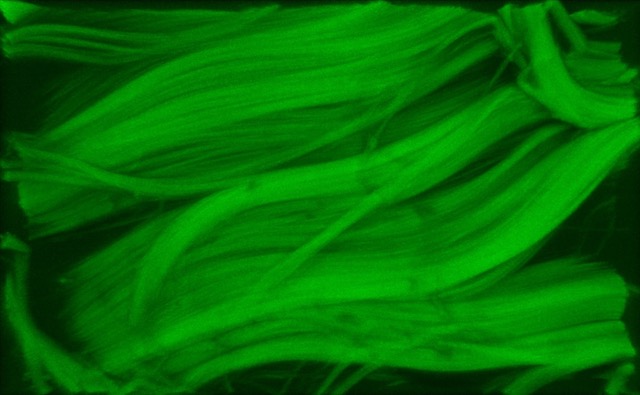
While it may seem like most humans are built essentially the same, our unique anatomical features not only define who we are but also determine how our bodies respond in different situations. For example, local variations in the properties of tendons – connective tissues that link muscle to bone – may lead to differences in function and predict susceptibility to injury.
Spencer Lake, professor of mechanical engineering & materials science in the McKelvey School of Engineering at Washington University in St. Louis, and members of his lab plan to study how these local differences in properties impact the mechanical and mechanobiological properties of tendons with a three-year, $520,000 grant from the National Science Foundation. This innovative study will apply a method used in geography for describing geospatial images to "map out" the location-specific properties of tendons and unveil which features best predict how tendons function in the body. Results of their research could potentially help to prevent common tendon injuries as well as inform new treatment strategies.
“Humans are so unique; we see nonuniformity in loading conditions, age, demographics and activity levels,” Lake said. “We will look at how spatial differences in tendon properties affect their performance and cellular behaviors.”
Lake’s team will look at the shape, organization, composition and mechanical properties of tendons to look for important ways in which variability drives function.
“We will quantify any differences in tissue features and describe how they are distributed spatially,” he said. “We will see if that dramatically changes how the tendon functions.”
In his Musculoskeletal Soft Tissue Lab, Lake plans to use both mouse and human tendons to measure passive tendon mechanics as well as active responses of living tendons to applied forces.
The research is expected to develop a transformative approach to studying tendon mechanics and mechanobiology and shed light on how variations in tissue properties correlate to mechanics at different locations and at the full tissue level. This information could help new approaches that would determine how these differences impact the function of other soft tissues, such as those in the cardiovascular system.
As part of the work, Lake will add a module on differences in soft tissues to an Orthopaedic Biomechanics course for undergraduate and graduate students. In addition, he will implement a hands-on workshop activity for middle and high school students through the Biomedical Science Program at Pattonville High School and with students in the BrightPath STEAM Academy. The research team will assemble an interdisciplinary group of students from various STEM backgrounds to work on this project, thus bringing varied perspectives to accelerate scientific discovery through collaborative teamwork.
Click on the topics below for more stories in those areas
Back to NewsFaculty in this story