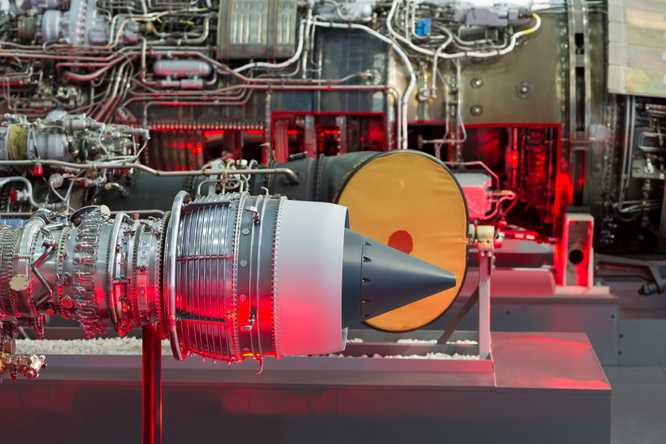

Ultrasound-fueled vapor may be key to fueling detonation-based propulsion engines
James Friend’s lab to develop atomizing nozzle with grant from Office of Naval Research
Detonation-based propulsion engines are potentially more efficient than existing combustion engines, but they can be unreliable. A team of researchers in the McKelvey School of Engineering at Washington University in St. Louis plans to use ultrasound to make fuel droplets smaller to overcome some of the challenges of using this technology.
James Friend, chair and the Stephen F. & Camilla T. Brauer Distinguished Professor, plans to develop an atomizing nozzle for detonation combustion in aircraft engines with a three-year, $717,990 grant from the Office of Naval Research. His co-principal investigator is Kareem Ahmed from the Department of Mechanical and Aerospace Engineering at the University of Central Florida (UCF).
Detonation-based engines have simpler architecture that makes them more efficient than combustion engines, but to reach that efficiency, the fuel must mix and evaporate quickly. Large droplets of fuel don’t vaporize quickly enough. Friend, Ahmed and their labs plan to develop a pintle-based inertial liquid atomizing nozzle technology, or PLIANT, that would produce sub-10 micrometer droplets. Droplets of this size would evaporate more quickly, mix better with air and improve engine efficiency.
With the funding, they plan to study detonation experimentally while quickly developing the design of the atomizing nozzle, anticipating up to 20 device iterations over the course of the work. Ideally, Friend said, the droplets smaller than 10 micrometers in size — about one-tenth the width of a human hair — would be delivered for combustion at flow rates relevant to sustain aircraft propulsion.
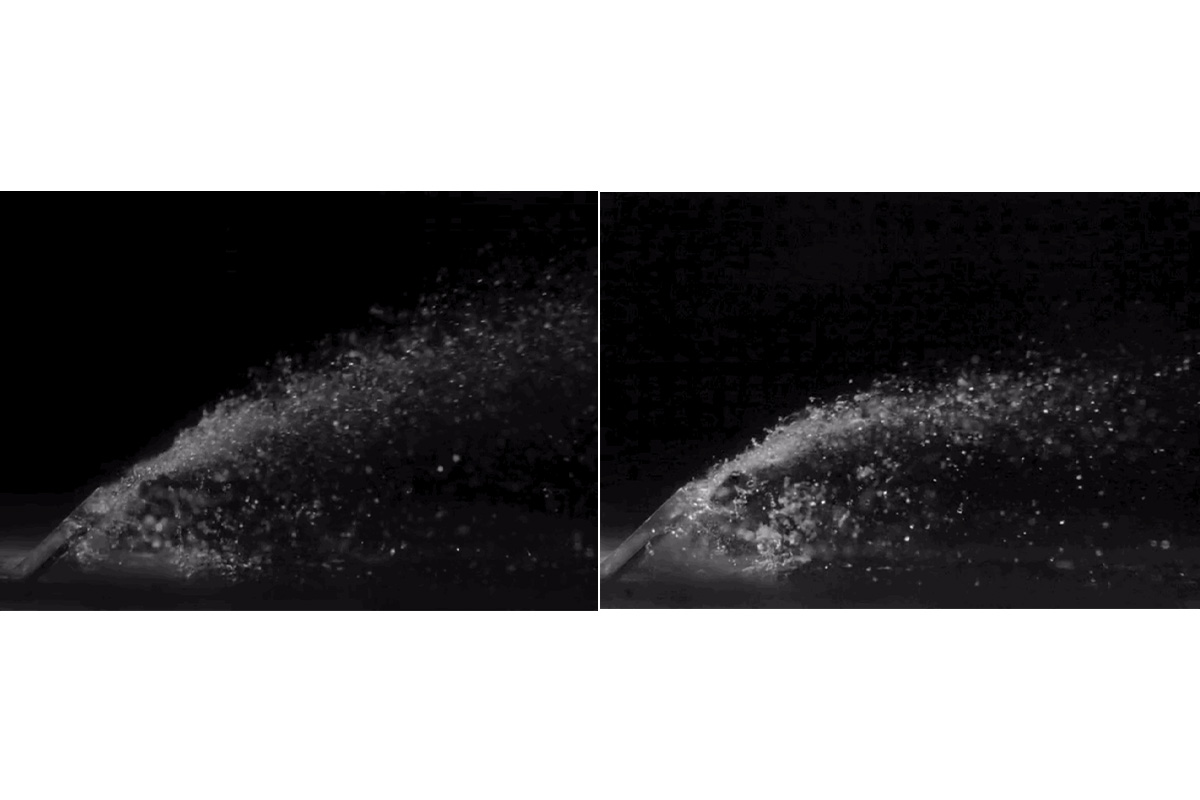
Using ultrasound instead of airflow to do the atomizing directly, the fuel is spread into a thin film on the pintle, and the ultrasound vibration breaks that film into tiny droplets.
Sub-10-micrometer droplets help a liquid-fueled rotating detonation engine because they vaporize and mix to a detonable gas mixture on the same time scale as the detonation wave from the ultrasound, Friend explained. Reducing the fuel droplet diameter from 50 micrometers to 10 micrometers reduces the single-droplet evaporation time by 25 times, which increases the fraction of fuel that becomes vapor and shortens the distance to heat release.
“The PLIANT method would directly generate sub-10-micrometer fuel droplets that have been shown to survive conventional aircraft engine combustion in our previous work,” Friend said. “We believe the technology will ideally suit detonation combustion in rotating detonation engines.”
Previously, the team developed a 40-millimeter diameter ultrasound pintle device that produced smaller droplets in combustion conditions. They later discovered that the ultrasound pintle device could directly produce sub-10 micrometer droplets without relying on gas-flow aided breakup.
Fabrication, prototyping, design iteration and design model development will take place in Friend’s lab at WashU, and device testing in the shock tube facilities will take place in Ahmed’s lab at UCF.
Separately, students in Friend’s lab will participate in the Adopting Sustainable Partnerships for Innovative Research Ecosystem (ASPIRE) project as part of a five-year, $650,000 grant from the Japanese Society for the Promotion of Science.
The program allows engineering graduate students from three universities to participate in a unique international exchange program, including WashU, Tokyo University of Agriculture and Biology, and University of California San Diego. Students will work on research related to engineering biology of cell membranes.
Students from the associate professor Yura Kurashina Lab will conduct research in Friend’s lab, and students from Friend’s lab, including Sujith Jayakumar, will conduct research in Kurashina’s lab in Japan, which is exploring the mechanisms of mechanosensors expressed on cell membranes.
Click on the topics below for more stories in those areas
Back to NewsFaculty in this story