WashU Ursaworks Robotics finishes strong at 2026 ARC Championship
Team earns place in top eight among highly competitive field of university robotics teams
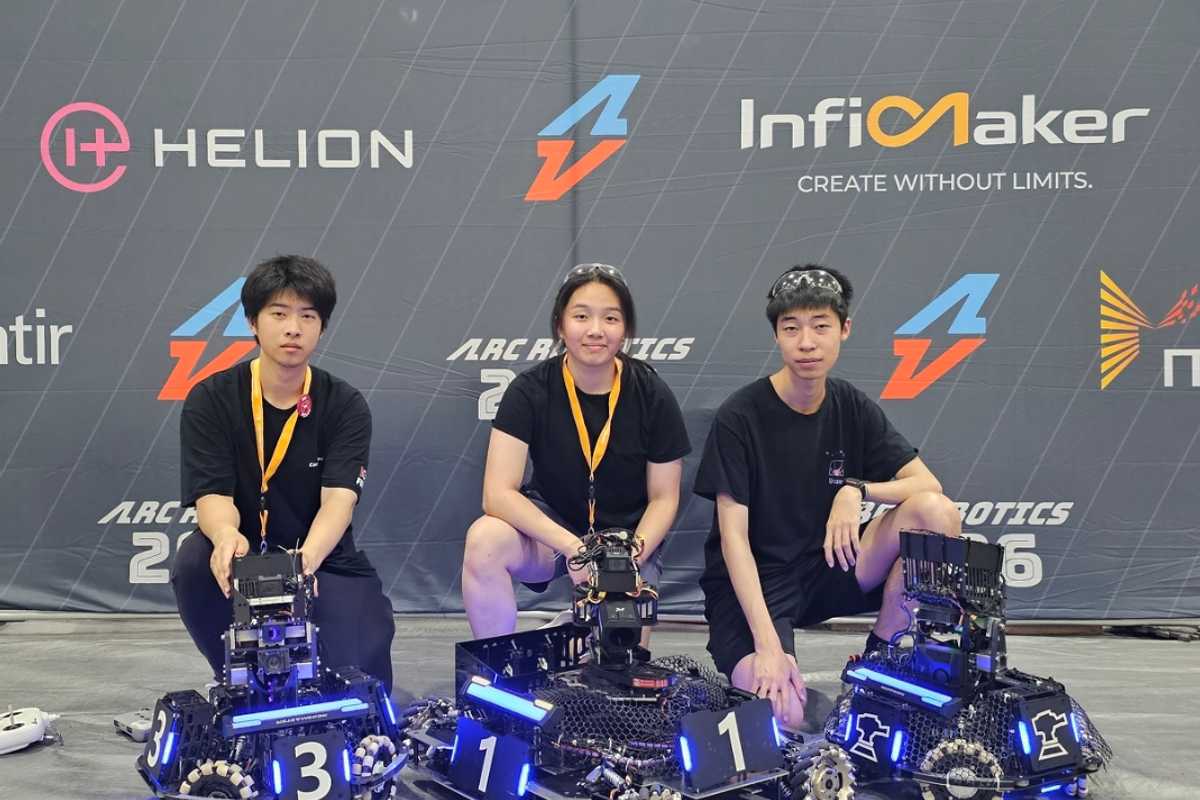
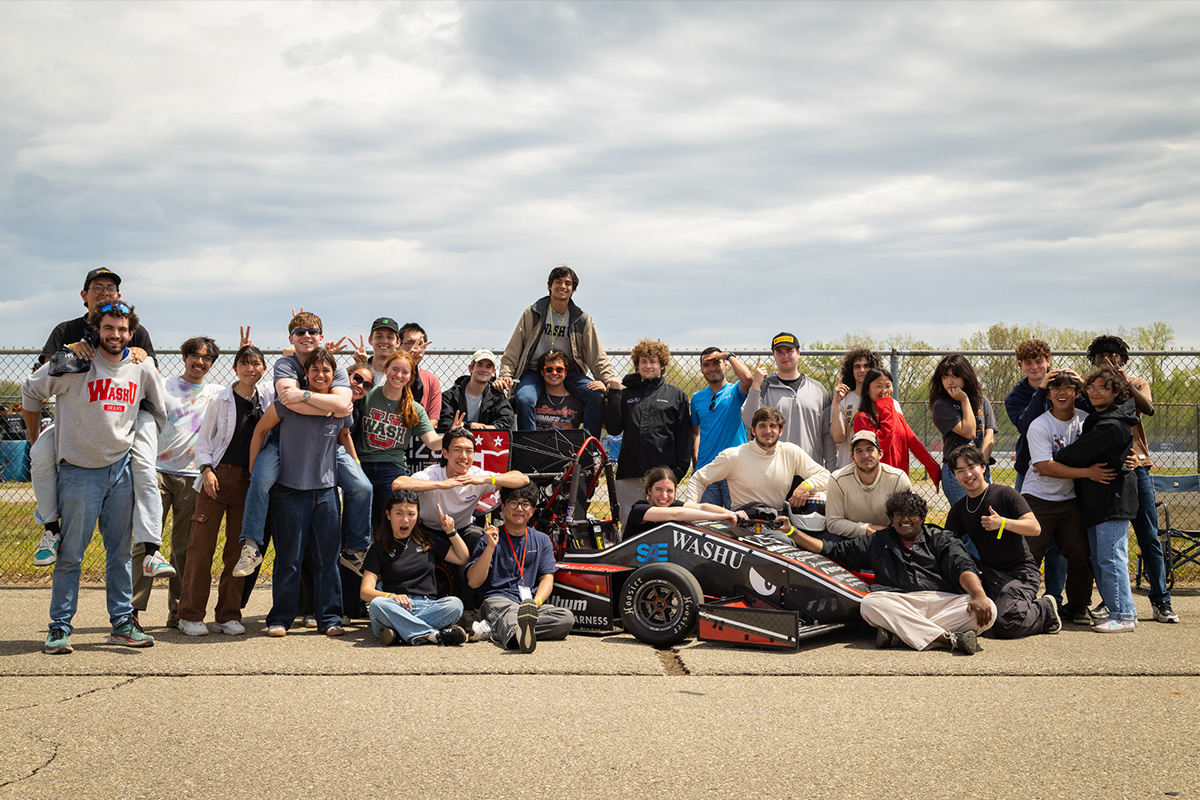
The WashU Ursaworks Robotics team recently finished in the top eight of more than 20 international and domestic university teams at the 2026 ARC Championship (ARCC) held at Purdue University.
Ursaworks, led by team president Naomi Hsieh, a junior majoring in electrical engineering, immerses its members in preparing for the high stakes and fast-paced matches at the ARCC, an annual robotics competition designed for participants to showcase their engineering capabilities through tactical combat and technical challenges. The group competed in the 1v1 competition, in which teams program autonomous robots to battle head-to-head in an arena setting, and the 3v3 competition, in which two opposing teams deploy three custom-built robots each onto a specialized field to engage in tactical combat and objective control.
Along the way, the group fosters a collaborative environment that promotes innovation and technical excellence through competitive robotics. Students gain practical, hands-on experience in robotics, building essential skills in mechanical design, embedded systems, computer vision and teamwork.
Below, Hsieh talks about the team’s progress, as well as its plans for the coming academic year.
What successes did Ursaworks Robotics have in the 2025-2026 school year?
During the Fall Activities Fair, we recruited 15 new members, which has been one of the largest expansions since the founding of the club. Our team designed and built three new custom robots: Infantry, Sentry and Hero. This summer, we successfully competed with all three robots in the 2026 ARC Robotics Competition, where our team finished among the Top 8 in the 1v1 division following a 2–1 victory over CU Robotics from the University of Colorado Boulder — one of the top teams in the competition. We are incredibly proud of this achievement, which proved our team’s determination, resilience and adaptability. Despite losing several veteran members to graduation, our leadership team stepped up to the challenge.
How did the team prepare for the ARC Robotics Competition?
Our team has been working towards the ARC Robotics Competition by engaging in mechanical design, electrical integration, programming, manufacturing and rigorous testing. We divided the robot into several subsystems and assigned duties to each group so that members could work more efficiently. The mechanical team has been designing and improving major systems such as the chassis, gimbal, shooter, electronics housing and camera mounts. Meanwhile, the electrical and programming teams have been working to optimize wiring, motor control, communication, computer vision and overall system integration. After completing the CAD designs, we manufactured and assembled the parts, tested each subsystem separately, and then integrated them into the complete robot. While testing, we encountered problems like mechanical interference, loose components, inconsistent shooting performance and wiring reliability. We used these results to enhance our designs, reinforcing structural components and making the robot easier to repair during competition. We have also been practicing driving, aiming and match strategy so that our operators and pit crew can respond quickly during matches. In addition to our technical preparation, we have been coordinating team meetings, open work sessions, task assignments, budgets, travel plans and club operation logistics. We ran several full-system tests and simulated matches to verify the robot’s reliability under realistic match conditions before the competition. Our main goal was not only to build a competitive robot, but also to ensure that each member of the team understood their role so that we could work together efficiently throughout the course of the competition.
What lessons have you learned from the past year?
Aside from the technical challenges, one of the biggest lessons from the past year was learning how to build and lead an organization. With a new leadership team, many experiences were a first — from navigating club fairs and showcase events to recruiting new members and organizing subteams. We learned that developing structured training programs — covering everything from hardware and safety practices to the ARC competition's technical systems and workflows — to introducing new members to the competition was crucial for integration. We recognized that everyone comes in with a different level of experience, so effective training requires flexibility, patience and adaptability to meet people where they are at. We also gained experience managing project schedules, coordinating teams and navigating the steep learning curve of the competition's rules and referee system. These experiences taught us that building a successful team not only depends on building high-quality, competitive robots but also creating a supportive learning environment that allows our members to learn and grow.
What are your plans for the upcoming academic year?
Our team looks forward to leveraging the momentum and success we have achieved in this past competition season. From a technical perspective, we are excited to further develop and enhance our robots’ capabilities by optimizing their field navigation, object detection algorithms and structural integrity. In the upcoming 2027 ARC Robotics Competition, our team aims to make the podium in the 1v1 division and advance to elimination rounds in the 3v3 division. From an organizational perspective, we have three main initiatives. First, we are excited to recruit new members who are passionate about robotics and motivated by the challenges presented by the ARC competition. Second, we want to further expand opportunities and resources for our members by actively seeking partnerships with corporate sponsors. Lastly, in addition to our current efforts, we are committed to expanding our visibility on campus and through social media by publishing timely updates about our engineering milestones and competition journey.
Students interested in learning more can follow the team on Instagram (@washu.ursaworks), visit its website or email WashU Ursaworks.