Biomolecular condensates reveal surprising activity as catalysts
Yifan Dai, Rohit Pappu labs and collaborators discover ‘condenzymes’ that contribute biochemical functions in cells
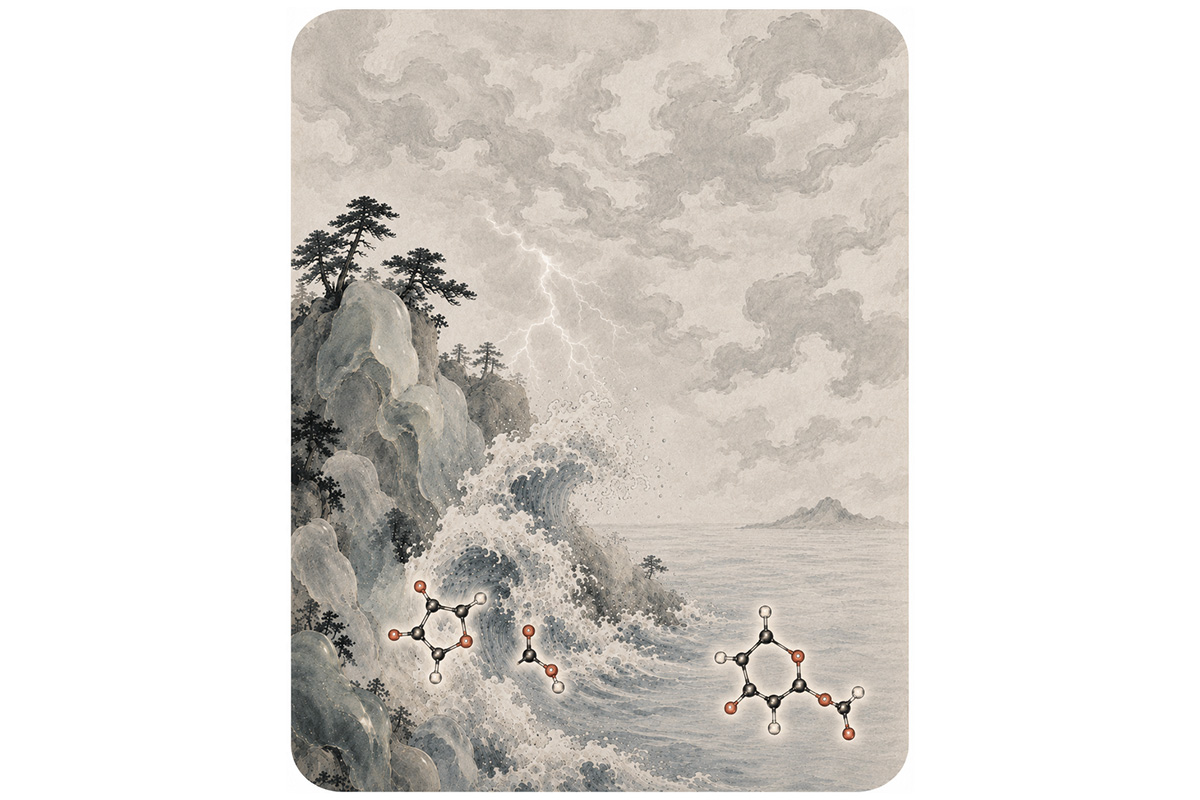
Biomolecular condensates are ubiquitous in live cells, including bacteria, viruses, plants and mammalian systems. These membraneless bodies, or molecular communities made up of DNA, RNA and proteins, are where molecules large and small within the cell come together to coordinate various biochemical reactions.
Phase separation, where molecules separate from the cellular milieu in ways similar to the separation of oil and water, is the driving force behind forming compositionally distinct biomolecular condensates. Most researchers have focused on proteins and nucleic acid components, which store, transmit and express genetic information in living cells, and their contributions to condensate formation.
New work led by Yifan Dai, assistant professor, and Rohit V. Pappu, the Gene K. Beare Distinguished Professor, both in the Department of Biomedical Engineering and the Center for Biomolecular Condensates in the McKelvey School of Engineering at Washington University in St. Louis, has led them to discover "condenzymes," or inherent catalytic activities of condensates, even though the condensates don’t have the components to act as catalysts themselves. Bringing molecules together via phase separation gives rise to the emergent property of functioning as catalysts.
The research was published July 24, 2026, in Molecular Cell.
Co-first authors were Michael W. Chen, a doctoral student in Dai’s lab; Xiao Guo, a former research technician in Dai’s lab; Mina Farag, MD, PhD, who earned a doctorate in biomedical engineering in Pappu’s lab and a medical degree from WashU in 2025; and Naixin Qian, a doctoral student in the lab of Wei Min, co-author and professor of chemistry at Columbia University.
Researchers in the Dai and Pappu labs showed that condensates formed by intrinsically disordered proteins can set up electric fields at the surfaces of condensates that catalyze reactions such as esterolysis, which splits esters into an acid and alcohol, and hydrolysis, where water is used to break chemical bonds.
Working with colleagues at Columbia, Stanford and Harvard universities, researchers showed that combining the surface electric field and fundamental changes to water molecule properties at condensate interfaces contributes to the condensates’ ability to function as catalysts. In addition, they showed that condensates, which function like “condenzymes,” can catalyze the hydrolysis of a variety of compounds, which allows nucleic acids to break down, and the hydrolysis of adenosine triphosphate (ATP), which carries energy through cells.
“These condenzymes catalyze the hydrolysis of a diverse sets of molecules,” Dai said. “This unique ability of condensates was shown to be valid in bacterial cells, which changes how we think about how the biochemical landscape is established in living cells.”
Dai and Pappu said their collaboration blended the electrochemical expertise in Dai’s lab with the computational modeling and biochemical expertise in Pappu’s lab, building on prior research in both labs.
“We see a potential revolution coming from these results because we now have a new archetype of catalysts to consider when thinking about biochemical reactions in cells,” Pappu said.
Dai and Pappu have been building the foundation for these results over the past few years. Dai’s lab most recently discovered that biomolecular condensates play the role of enzymes in cells’ metabolic cycle. In a 2023 paper in Chem, Dai and colleagues reported that the interface of biomolecular condensates possesses an electric potential, and the interfacial electric field can drive redox reactions. Pappu’s lab showed that naturally occurring condensates such as nucleoli are defined by pH gradients, and condensates, despite being membraneless bodies, are defined by membrane-like potentials. The discovery of condenzymes represents the next epoch in the rapidly emerging understanding of condensate functions.
The functions of condensates have been debated, Pappu said, leading some to suggest that condensates might be bystanders in cells. These findings challenge that suggestion, he said.
“The outcome is that cells must have evolved mechanisms to leverage the inherent catalytic functions of condenzymes, or cells must have adapted mechanisms that blunt condenzyme functions,” Pappu said. “Either way, the findings change how we think about condensates in living cells because the implications for cell physiology, diseases such as cancer and neurodegeneration, and the field of synthetic biology are likely to be of considerable significance.”
Chen MW, Guo X, Farag M, Qian N, Song X, Ni A, Liu V, Yu X, Ma Y, Yang L, Yu W, King MR, Lee J, Zare RN, Min W, Pappu RV, Dai Y. Condenzymes: Biomolecular condensates can function as inherent catalyts. Molecular Cell. July 24, 2026. DOI: https://doi.org/10.1016/j.molcel.2026.07.008
Funding for this research was provided by Washington University in St. Louis McKelvey School of Engineering and the Center for Biomolecular Condensates; the US Air Force Office of Scientific Research (FA9550-20-1-0241, FA9550-21-1-0170); the St. Jude Collaborative on the Biology and Biophysics of RNP granules; the National Science Foundation (MCB 24196980); and the National Institutes of Health (R35 GM149256, F32GM146418-01A1).