

WashU-led team wins $4.25 million DARPA grant to improve fuel injector design
Research led by James Friend aims to crack the code of atomization for future aircraft engines
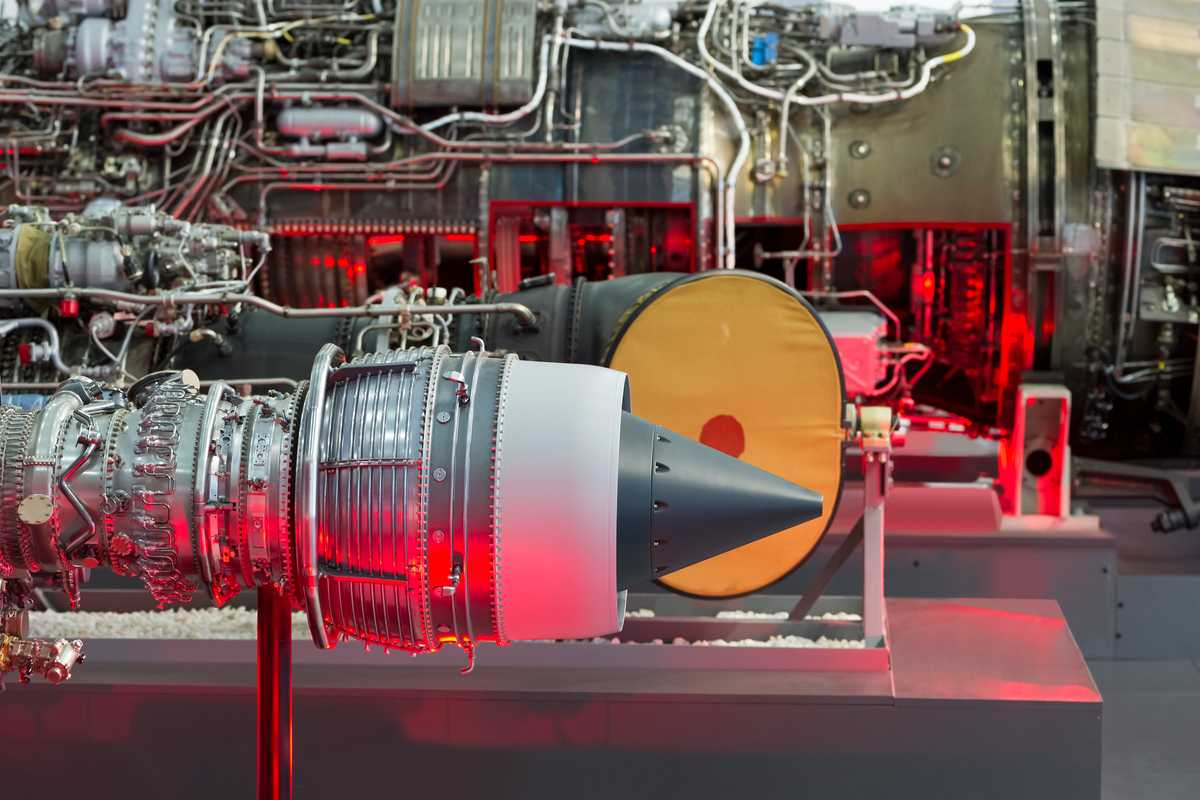
Scientists have been tackling the challenge of atomization for centuries, primarily because liquid breakup involves several different principles of physics that are difficult to capture with simple equations.
Now, a multi-institutional team led by James Friend, the Stephen F. & Camilla T. Brauer Distinguished Professor in the Department of Mechanical Engineering & Materials Science in the McKelvey School of Engineering at Washington University in St. Louis, plans to continue that challenge with a five-year, $4.25 million grant from the Defense Advanced Research Projects Agency (DARPA).
With the funding, Friend and collaborators from University of California, San Diego; University of Central Florida and University of Florida, plan to integrate artificial intelligence and physics-based simulation to help design better fuel injectors for these advanced aircraft and engines with intricately designed engines.
Their research, Foundational Laws and Automated Rule Extraction for Ultrasonic Fuel-Film Atomization Toward High-Speed Combustion-Ready Injector Design (FLARE), will further study the elusive answer of how liquid fuel breaks into droplets.
“Droplet formation affects how well fuel mixes and burns,” Friend said. “This is especially important for high-speed and hypersonic flight, where engines are much harder to design. Our goal is to find simple design rules that engineers can use.”
The research falls under DARPA’s Automated Discovery for Design and Control of Turbulent Systems (AutoDIDACTS), which is looking to demonstrate and validate new data-informed paradigms to explore and optimize designs for various aeronautics and turbulent control problems related to the Department of War.
The team’s research addresses this goal by using a small-scale lab platform to study droplet breakup, thin-film atomizer tests, thicker-film atomizer tests with airflow, and validation in a detonation tube. They also will use AI tools to find patterns in the results, then use those patterns to create design maps for fuel injectors.
“These results will help engineers to design fuel injectors faster as well as improve combustion stability and support detonation-based and hypersonic propulsion,” Friend said. “We want to turn fuel-injector design from a lot of trial and error into a more scientific, reliable process.”
The work builds on another collaboration in Friend’s lab that is designing an ultrasound atomization nozzle. That project, PLIANT, seeks to create a device that would produce sub-10 micrometer droplets. Droplets of this size would evaporate more quickly, mix better with air and improve engine efficiency.
Click on the topics below for more stories in those areas
Back to NewsFaculty in this story